
close
Choose Your Site
Global
Social Media


Views: 0 Author: Site Editor Publish Time: 2026-01-01 Origin: Site


Brass hex nipples are a common choice in many industrial applications. But are they truly the best option? In this article, we will compare brass nipples with aluminum nipples. You’ll learn about the pros and cons of each material to help you make the best decision for your needs.
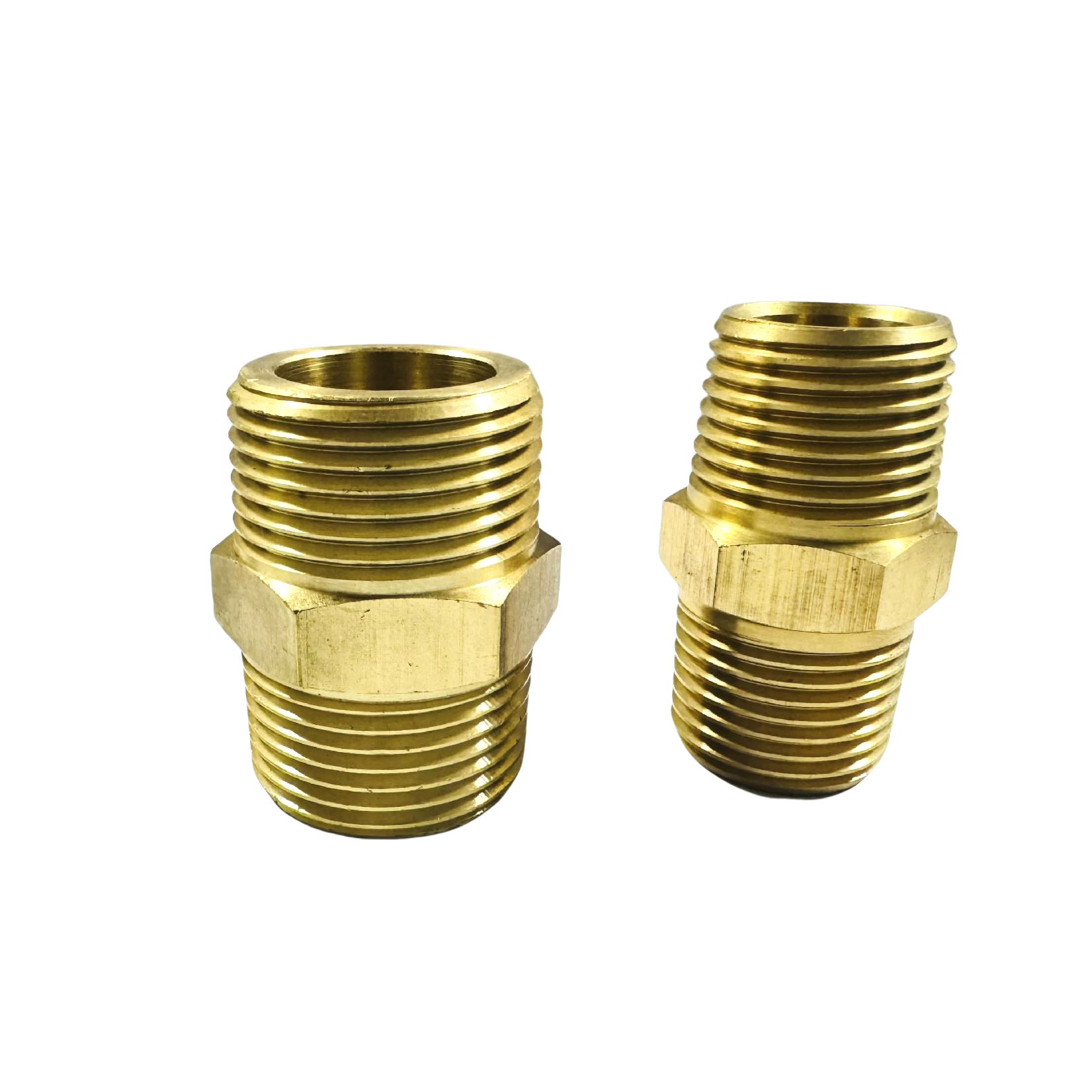
Brass nipples weigh around 1 gram each. While this weight might seem small, it can have a considerable effect in industrial applications where the overall weight of components is critical. Brass is heavier than aluminum, making it less desirable in systems where reducing weight is a key factor for efficiency and performance. However, for many industrial applications, the additional weight can actually contribute to stability and durability.
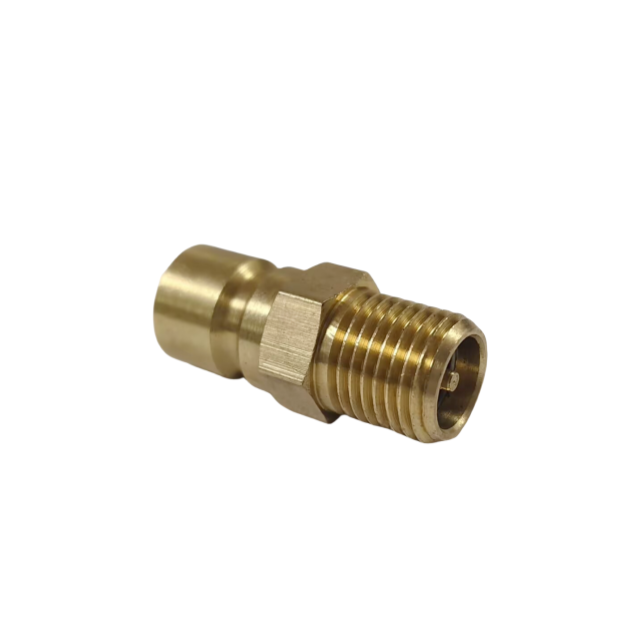
Aluminum nipples are much lighter, weighing about 0.33 grams each. This weight reduction can be beneficial in systems where the total weight of components needs to be minimized for better performance, especially in pneumatic systems or machinery where every gram counts. The lighter weight of aluminum nipples can improve system efficiency, reduce energy consumption, and allow for smoother operation in weight-sensitive environments.
For most industrial applications, the difference in weight between brass and aluminum nipples may not have a significant effect on overall performance. However, in precision engineering or pneumatic applications, the lighter weight of aluminum can provide a noticeable improvement in system dynamics, particularly in high-speed systems where reducing weight can minimize wear and tear.
Material | Weight per Nipple | Total Weight per Assembly (72 Nipples) | Impact on Performance |
Brass | 1 gram | 72 grams | Adds weight, stability in heavy-duty applications |
Aluminum | 0.33 grams | 23.76 grams | Reduces weight, enhances efficiency in precision systems |
Brass nipples are known for their excellent corrosion resistance, particularly in environments with exposure to moisture and salts. In industrial settings where components are exposed to water, moisture, or corrosive chemicals, brass nipples offer superior durability over time. Their ability to resist rust and corrosion makes them ideal for industries such as construction, heavy trucks, and machinery that operate in harsh environments.
Aluminum nipples are often anodized to enhance their corrosion resistance, but they still tend to corrode more easily than brass. When exposed to saltwater or harsh chemicals, aluminum is more susceptible to galvanic corrosion, especially when paired with dissimilar metals such as stainless steel. In environments like those found in the construction or heavy equipment industries, where exposure to harsh elements is common, brass nipples will perform better in the long term.
For industries operating in coastal areas, wet environments, or industries where components are exposed to chemicals, brass nipples are the more reliable option. Aluminum nipples may be suitable for dry environments, but they require more maintenance to ensure they perform well over time.
Material | Corrosion Resistance | Best Use Case |
Brass | High | Marine, construction, and heavy machinery in harsh environments |
Aluminum | Moderate | Dry, low-corrosion environments |
Brass nipples are known for their high tensile strength and durability. In industrial applications, especially in high-pressure systems, brass nipples are capable of withstanding greater stresses and tensions without cracking, stripping, or losing their structural integrity. This makes them particularly suitable for use in heavy machinery, construction equipment, and pneumatic systems that require long-lasting, reliable components.
While aluminum nipples are lighter, they generally have lower tensile strength compared to brass. In high-pressure environments or systems that undergo frequent adjustments, aluminum nipples are more likely to wear out or become damaged over time. They can strip or deform under heavy load, which makes them less ideal for demanding applications in construction or engineering machinery.
Brass nipples are more resistant to wear and tear over time. They can withstand repeated tension adjustments without compromising their functionality, making them ideal for long-term use in industrial environments. Aluminum nipples may require more frequent maintenance and replacement, especially in heavy-duty applications.
Material | Tensile Strength | Durability Over Time | Maintenance Frequency |
Brass | High | Long-lasting, fewer adjustments needed | Low maintenance, long lifespan |
Aluminum | Moderate | Prone to damage with frequent adjustments | High maintenance, more frequent care |
Aluminum nipples are easier to adjust compared to brass due to their softer material. This makes them ideal for systems where fine-tuning is necessary, such as in precision pneumatic systems or automated machinery. Aluminum nipples allow for more accurate adjustments during setup or maintenance, which is crucial in high-precision industries.
On the other hand, brass nipples offer greater stability over time. Brass is more resistant to damage from high torque or frequent adjustments, making it the preferred choice for heavy-duty applications. Brass nipples retain their shape and strength even after prolonged use, reducing the need for constant maintenance and ensuring reliability in the long run.
Aluminum nipples are ideal for systems that require frequent adjustments and fine-tuning, such as in automated machinery, robotics, or high-precision pneumatics. Brass nipples, however, are better suited for high-pressure or heavy-duty systems where stability and durability are crucial, such as in construction equipment, industrial machinery, and pneumatic tools.
Material | Adjustment Precision | Ideal Use Case |
Brass | Moderate | Heavy-duty, high-stress environments |
Aluminum | High | Fine-tuning adjustments, automated systems |
For systems where weight is a critical factor—such as in pneumatic systems, robotics, or lightweight industrial machinery—aluminum nipples are the best choice. Their reduced weight enhances system performance and energy efficiency.
For industries that require components to withstand high pressure and tough environments, brass nipples are the ideal choice. Their higher tensile strength, corrosion resistance, and ability to perform well under stress make them the go-to for long-lasting industrial applications.
● For Coastal or Humid Environments: Brass nipples are preferred due to their superior corrosion resistance.
● For High-Performance or Automated Systems: Aluminum nipples are optimal due to their lightweight and precise adjustment capabilities.
● For Heavy-Duty and High-Pressure Systems: Brass nipples provide the necessary strength and durability.
Tip: Always consider your specific environment and system requirements when choosing between brass and aluminum nipples.
Use Case | Recommended Material |
Coastal/Salty Environment | Brass |
High-Performance Applications | Aluminum |
Heavy-Duty/High-Pressure Systems | Brass |
Brass nipples offer excellent durability and corrosion resistance, making them ideal for demanding environments. Aluminum nipples are lighter and more suitable for high-performance systems where weight reduction is key. For industries that require longevity and resistance to harsh conditions, brass nipples are the superior choice. Dongguan Tianying Co., Ltd. provides high-quality brass nipples that ensure long-term reliability, offering value with their robust design and excellent performance in corrosive environments.
A: Brass hex nipples are commonly used in industrial and construction applications, offering durability and corrosion resistance, especially in high-pressure and corrosive environments.
A: Brass hex nipples are more durable and corrosion-resistant, making them ideal for harsh environments. Aluminum nipples are lighter but may wear out faster in demanding conditions.
A: Brass nipples provide superior strength and longevity, which is essential for heavy machinery operating under high pressure and in corrosive conditions.
A: Regular inspections and cleaning are recommended. Ensure that the nipples are free from debris and corrosion, especially in saltwater or wet environments.


