
close
Choose Your Site
Global
Social Media


Views: 0 Author: Site Editor Publish Time: 2025-12-31 Origin: Site


Quick couplings play a crucial role in numerous industries, providing fast and efficient connections. Have you ever wondered which quick coupling type best suits your needs? In this article, we'll explore the various quick coupling types you should know and how to choose the right one for your application. You'll gain valuable insights into their functions, materials, and specific uses.
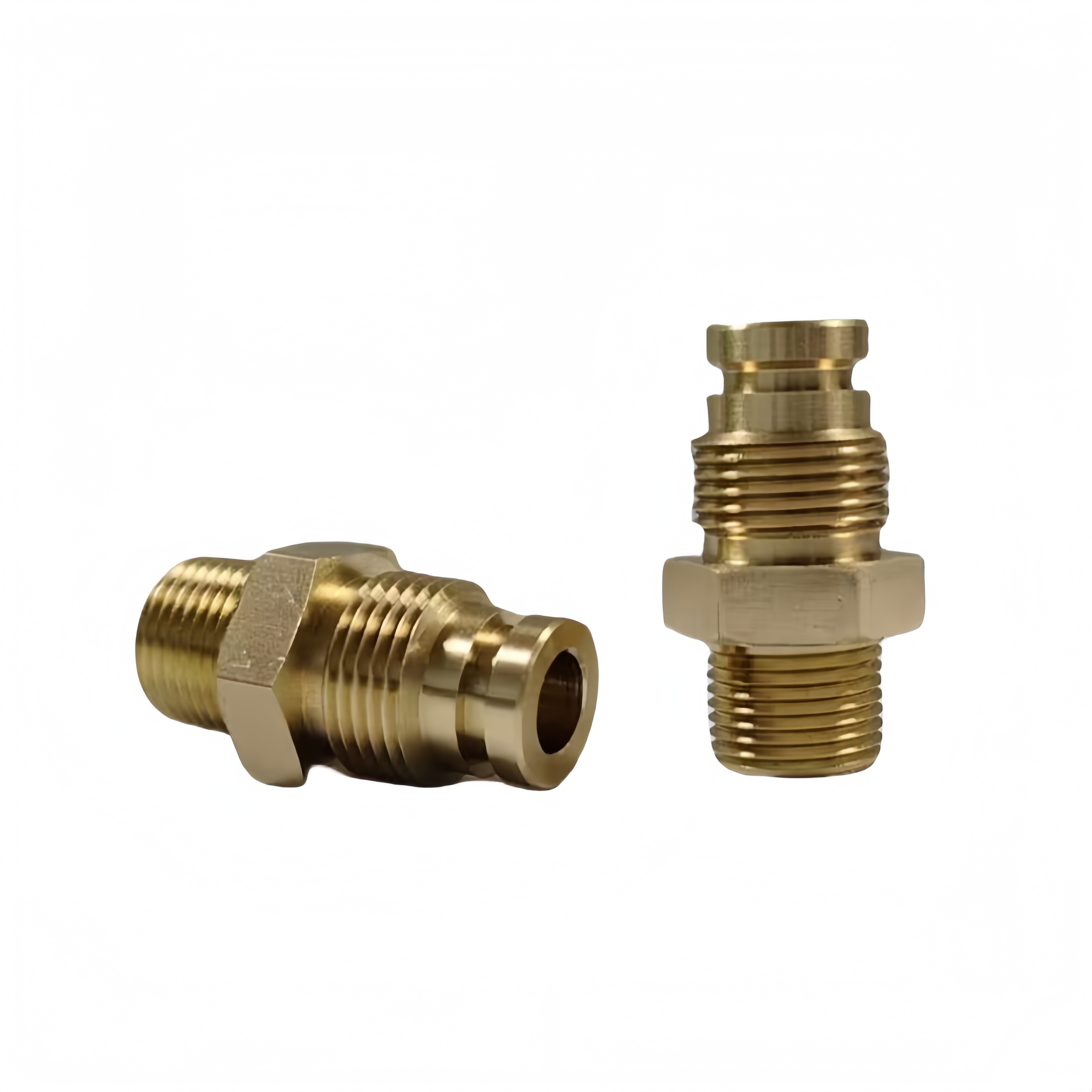
A quick coupling is a device designed for fast and easy connection and disconnection of fluid lines without the need for any special tools. These couplings are commonly used in a wide range of industries, such as manufacturing, automotive, and construction, due to their convenience and ability to save time.
The primary function of a quick coupling is to provide a secure connection between pipes or hoses, ensuring a stable fluid flow while minimizing leaks and pressure loss. This is achieved through internal components like sealing mechanisms, plugs, and sockets, which work together to create a hermetically sealed connection within milliseconds. When disconnected, the system automatically shuts off, preventing any fluid leaks or pressure loss.
Key Components of Quick Couplings:
● Sealing Mechanisms: Ensures a tight seal during operation, preventing leaks.
● Plugs: The male component that fits into the female socket.
● Sockets: The female counterpart that receives the plug and forms the connection.
Feature | Quick Couplings | Traditional Fittings |
Tool Usage | No tools required for installation and removal | Requires tools (e.g., wrenches, screwdrivers) |
Ease of Installation | Fast and easy connection with a simple push | Installation can be time-consuming and requires multiple steps |
Application | Ideal for frequent connections and disconnections | Suitable for static or infrequently altered connections |
Security | Quick couplings are designed to be secure and prevent accidental disconnection | Risk of loosening or leakage over time |
Quick couplings are ideal for environments where frequent connections and disconnections are necessary. Traditional fittings, on the other hand, are better suited for situations that require stable, permanent connections.
Screw-type couplings are one of the most commonly used types of quick couplings. They feature male or female threads that allow the user to manually screw the two parts together.
Common Applications:
● Plumbing
● Industrial piping systems
● HVAC installations
Features and Benefits:
● Simplicity: Easy to install and remove by hand.
● Durability: Typically made from brass or steel, these couplings are highly resistant to wear and tear.
● Secure Connection: Screw-type couplings are less likely to loosen under high pressure or vibration, making them suitable for more demanding applications.
Push-to-connect couplings are designed for easy, tool-free installation. The user simply pushes the plug into the socket until it clicks into place.
Common Applications:
● Light-duty equipment
● Household plumbing repairs
● Air tools and compressors
Features and Benefits:
● Tool-Free Operation: No need for wrenches or other tools; installation is fast and easy.
● Ease of Use: Ideal for applications requiring frequent connections and disconnections.
● Security: Once the connection is made, it is secure and resistant to leaks.
Push-to-lock couplings are similar to push-to-connect couplings but with an added feature for securing the connection. After the plug is inserted, it is locked in place using a built-in mechanism, ensuring that the coupling stays in place even under high pressure.
Common Applications:
● High-pressure environments
● Hydraulic systems
● Industrial machinery
Features and Benefits:
● Secure Locking: The locking mechanism ensures a secure and stable connection, even under challenging conditions.
● High Pressure Resistance: Suitable for systems that operate under higher pressures or where vibrations are common.
● Durability: Often made from heavy-duty materials, such as stainless steel, these couplings can withstand harsh environments.
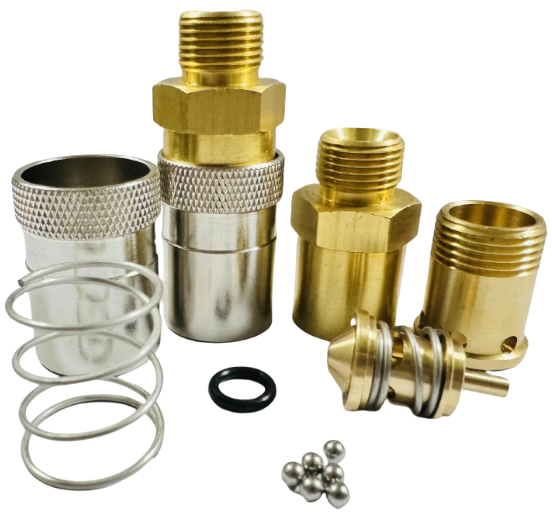
The material used for a quick coupling is crucial to its performance. The right material will ensure durability, resistance to corrosion, and the ability to withstand high pressure.
Material | Advantages | Suitable Applications |
Stainless Steel | Corrosion-resistant, durable, strong | Harsh environments, high-pressure systems |
Brass | Good sealing properties, cost-effective | Plumbing, low-pressure applications |
Composite | Lightweight, corrosion-resistant, impact-resistant | Automotive, aerospace, sensitive equipment |
Selection Criteria:
● Corrosion Resistance: If your system will be exposed to moisture or chemicals, consider materials like stainless steel or composite materials.
● Pressure Capacity: Choose materials that can handle the pressure your system will operate under, particularly for hydraulic or high-pressure applications.
● Impact Resistance: For environments prone to physical damage, composite materials offer an excellent balance of light weight and durability.
The environment in which the coupling will be used plays a key role in determining which type of quick coupling is best. Different materials and designs are suited for different operating conditions.
Considerations:
● High Temperatures: Materials like stainless steel and certain composites perform well under high heat.
● Corrosive Fluids: For chemicals or acidic fluids, opt for couplings made from materials that are resistant to corrosion.
● Exposure to Dirt or Contamination: Flat-face couplings are ideal for minimizing contamination during disconnection.
The flow rate and operating pressure are critical factors when choosing a quick coupling. A coupling that is too small for the required flow will result in inefficiency and potential system failure.
Application Type | Flow Rate (SCFM) | Pressure Rating |
Low Flow Systems | 0-10 SCFM | 100 PSI |
High Flow Systems | 50-200 SCFM | 200+ PSI |
Choosing the Right Coupling:
● Flow Rate: Ensure the coupling can handle the required flow rate. Different sizes and designs offer varying flow capacities.
● Pressure Rating: Select a coupling with a pressure rating that matches or exceeds the operating pressure of your system.
One of the most important features of a quick coupling is its ability to create a secure, leak-free connection. A small leak can lead to significant efficiency losses and safety hazards.
Coupling Type | Leak Prevention Features | Applications |
Flat-Face Couplings | Zero spillage, no air inclusion | Construction, forestry |
Poppet Valve Couplings | High mechanical resistance, minimal seal extrusion | Agriculture, oil tools |
Sealing Function:
● High-quality quick couplings are designed with precision seals to prevent any fluid from escaping during connection and disconnection.
● The sealing material should be compatible with the fluids used in the system, whether it's water, air, or hydraulic fluid.
Accidental disconnections can be dangerous, especially in high-pressure systems. Quick couplings with safety mechanisms help prevent such incidents.
Safety Mechanism | Feature | Benefit |
Button Release System | Requires intentional pressure to release | Reduces accidental disconnection |
Ring Release System | Simple pull mechanism | Faster disconnection, but less secure |
Safety Mechanisms:
● Button Release Systems: These prevent accidental disconnection by requiring intentional pressure to release the plug from the socket.
● Ring Release Systems: Though common, these are less secure under extreme conditions and may result in accidental disconnection.
Quick couplings are evolving with advancements in materials and design. Modern technologies allow for greater durability and ease of use.
Technology | Benefit | Applications |
Zero-Pressure Insertion | Easier plug insertion without manual pressure release | Pneumatic systems, air tools |
Composite Materials | Corrosion-resistant, lightweight, impact-resistant | Automotive, aerospace |
Innovative Materials:
● Composite Materials: These are gaining popularity due to their high resistance to corrosion, impact, and extreme temperatures.
● Zero-Pressure Insertion: This new technology allows for easy insertion of the plug into the socket without requiring pressure to be manually released, improving user experience.
As industries evolve, so do the requirements for quick couplings. For example, the construction industry’s growing need for high-pressure, leak-free couplings has driven the development of more robust and versatile models.
Before choosing a quick coupling, it’s essential to understand the specific needs of your application. Consider factors such as operating environment, pressure, flow, and any special requirements like resistance to static or shock.
If standard quick couplings don’t meet your needs, it’s a good idea to consult with experts. Many suppliers can provide customized solutions tailored to your unique requirements.
Choosing the right quick coupling involves considering material, application, and functional requirements. Understanding the specific needs of your system, such as pressure, flow, and environmental conditions, helps you make an informed choice. For industries looking for reliable and durable couplings, products from Dongguan Tianying Co., Ltd. offer outstanding value. Their solutions are designed to meet diverse industrial needs, providing excellent performance and longevity.
A: Quick coupling types are devices used to quickly connect and disconnect fluid lines. They vary based on material, application, and pressure capacity, offering easy installation and secure connections.
A: When choosing a quick coupling type, consider the material, pressure requirements, and the environment it will be used in. Selecting the right type ensures reliability and safety.
A: Quick coupling types allow for efficient and safe connections in industrial environments, reducing downtime and minimizing risks, especially in high-pressure or hazardous systems.
A: Quick coupling types provide fast connections, reduce tool dependency, prevent leaks, and enhance safety by ensuring secure connections, especially in high-pressure applications.
A: The cost of quick coupling types varies based on material, design, and functionality. While they may seem costly, their long-term durability and efficiency can lead to cost savings over time.
A: Yes, certain quick coupling types are specifically designed for high-pressure systems, offering secure connections that prevent leaks and ensure optimal performance.


