
close
Choose Your Site
Global
Social Media


Views: 0 Author: Site Editor Publish Time: 2026-06-24 Origin: Site


In mold cooling systems, temperature control circuits, injection molding, die casting, and industrial water circulation, the French Standard Quick Coupling is widely used for fast, safe, and reliable fluid connection. A French Standard Quick Coupling allows operators to connect and disconnect cooling lines quickly, helping reduce mold changeover time, prevent connection mistakes, and maintain stable mold temperature during production.
For mold manufacturers and injection molding factories, the Quick Coupling is not only a small accessory. It is part of the mold cooling performance. If the French Standard Quick Coupling is selected correctly, the cooling system can achieve better flow, cleaner operation, easier maintenance, and faster mold handling. If the wrong Quick Coupling is selected, the system may face leakage, poor flow, wrong circuit connection, unstable temperature, or unnecessary downtime.
Among French-style mold cooling connectors, the RPL and RMI series are two important product directions. The RPL series is commonly known for full-flow performance, fast operation, and visual circuit identification. The RMI series is more modular and flexible, with different passage diameters and shut-off options for mold cooling and heating applications. This guide explains how the French Standard Quick Coupling works, how RPL and RMI series differ, and how buyers can select the right Quick Coupling for mold cooling systems.
A French Standard Quick Coupling is a quick-release connector designed for cooling water, hot water, chilled water, glycol water, heat transfer fluid, and mold temperature control circuits. It is commonly used on thermoplastic injection molds, Zamak molds, aluminum injection molds, die casting molds, and temperature control equipment.
A complete French Standard Quick Coupling connection usually includes a socket and a plug. When the plug is inserted into the socket, the Quick Coupling creates a secure connection and allows fluid to pass through the cooling circuit. When the operator needs to change the mold or adjust the system, the French Standard Quick Coupling can be disconnected quickly.
The main value of a French Standard Quick Coupling is convenience and reliability. In a mold workshop, operators may need to connect many water circuits every day. A reliable Quick Coupling helps avoid slow threaded installation, hose clamp adjustment, and repeated manual sealing work. It also helps reduce setup errors when the cooling system has multiple inlet and outlet circuits.
A French Standard Quick Coupling is especially useful for:
Injection mold cooling circuits
Die casting mold temperature control
Hot water and cold water circulation
Glycol water systems
Mold temperature controller connections
Water manifold connections
RPL and RMI series replacement
Quick mold changeover stations
Multi-circuit mold cooling layouts
Because different mold systems use different profiles, the French Standard Quick Coupling should not be mixed with American, European, or Japanese-style connectors unless compatibility is clearly confirmed.
Cooling is one of the most important stages in injection molding. In many molding processes, cooling time accounts for a large share of the total cycle. If mold cooling is unstable, the finished part may suffer from warpage, sink marks, dimensional deviation, poor surface finish, or longer cycle time.
The French Standard Quick Coupling supports cooling performance by creating a reliable connection between the mold and external water supply. When the Quick Coupling has the right bore size and smooth flow path, water can circulate more efficiently. When the French Standard Quick Coupling is easy to identify and easy to operate, operators can connect the right circuits faster.
A poor Quick Coupling selection may cause several production problems:
| Problem | Possible Cause Related to Quick Coupling | Production Impact |
|---|---|---|
| Water leakage | Wrong profile, damaged seal, poor locking | Unsafe workplace and cooling loss |
| Low water flow | Bore too small or blocked connector | Longer cycle time and unstable cooling |
| Wrong circuit connection | Poor identification of inlet and outlet lines | Uneven mold temperature |
| Slow mold change | Difficult disconnection or unclear circuit layout | Lower machine utilization |
| Frequent maintenance | Weak locking, worn O-rings, unsuitable material | Higher downtime and spare part cost |
A high-quality French Standard Quick Coupling helps solve these issues by improving connection speed, flow performance, circuit identification, and maintenance efficiency.
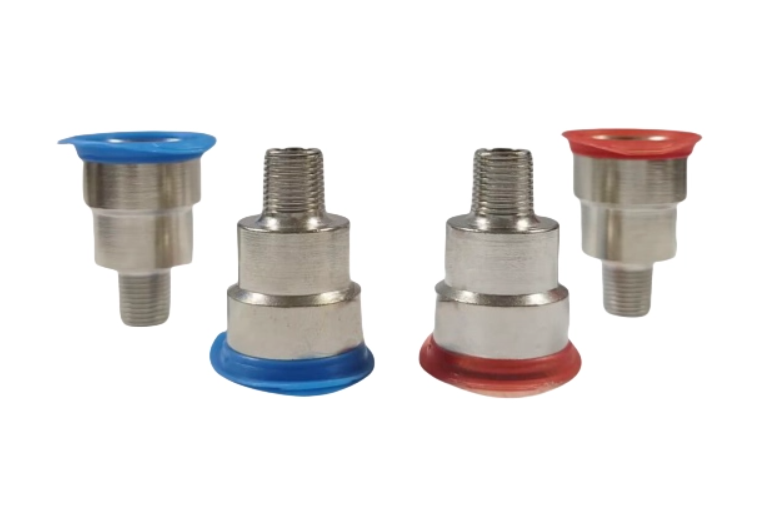
The RPL series French Standard Quick Coupling is commonly used for full-flow temperature control applications. It is designed to support mold cooling circuits where easy connection, visual identification, and stable water flow are important.
The RPL series Quick Coupling is often selected for cold water, chilled water, or hot water circuits. It is suitable for mold temperature control connections on thermoplastic molds, Zamak molds, and aluminum injection molds. In many applications, RPL products are used where operators need simple handling and quick circuit recognition.
One of the most practical features of the RPL series French Standard Quick Coupling is circuit identification. Red and blue collars can be used to identify hot and cold circuits, inlet and outlet lines, or different cooling zones. This is especially useful when the mold has multiple water circuits and the operator must connect hoses quickly during mold setup.
Another key feature is the full-flow design. A full-flow Quick Coupling helps maintain better water passage and reduce unnecessary pressure loss. In mold cooling systems, this is important because restricted flow may reduce cooling efficiency. A full-flow French Standard Quick Coupling can support stable circulation and better mold temperature control.
The RPL series French Standard Quick Coupling is often suitable for:
Full-flow cooling water circuits
Mold temperature control systems
Fast mold change operations
Color-coded inlet and outlet identification
Compact mold cooling layouts
Thermoplastic injection molds
Zamak and aluminum injection molds
Applications where easy maintenance is needed
RPL products are often available in several nominal sizes, such as 6mm, 8mm, and 12mm. The correct size should be selected according to the mold cooling channel, hose diameter, required water flow, and available installation space.
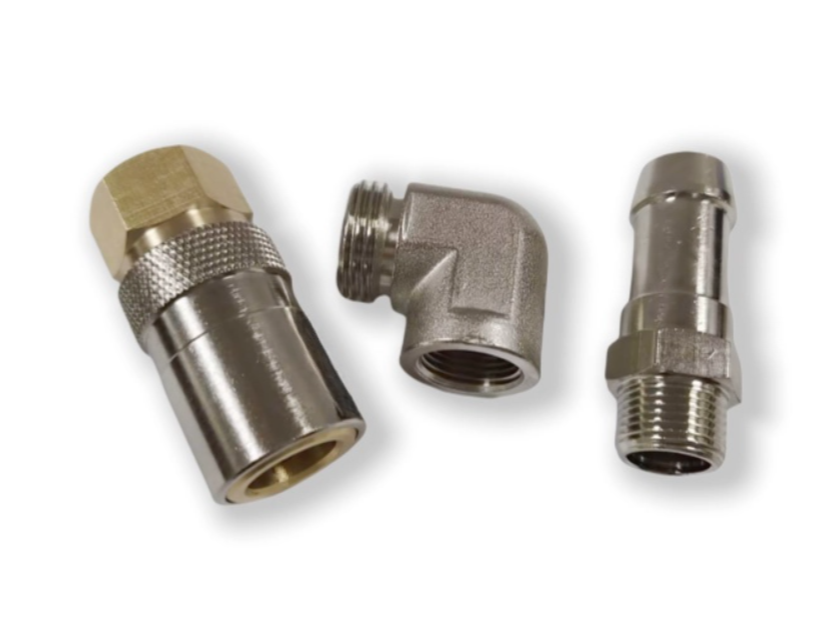
The RMI series French Standard Quick Coupling is designed for more flexible temperature control applications. It is often used when the buyer needs modular options, different passage diameters, and shut-off choices for mold cooling or heating circuits.
Compared with RPL, the RMI series French Standard Quick Coupling is usually more suitable for systems that require more configuration options. RMI products may be available with several passage diameters and different shut-off structures. This allows the buyer to select the Quick Coupling according to flow requirement, leakage control needs, and installation layout.
The RMI series Quick Coupling can be used for hot water, cold water, glycol water, and heat transfer fluids. It is commonly used in injection press temperature control circuits, both on the mold side and the supply side. For factories using mold temperature controllers or multi-circuit cooling systems, the RMI series French Standard Quick Coupling can provide a more flexible connection solution.
A key advantage of the RMI series is the possibility of shut-off options. A shut-off Quick Coupling helps reduce fluid loss when the connection is disconnected. This is useful for frequent mold changes, cleaner working areas, and temperature control systems where the operator wants to avoid draining circuits.
The RMI series French Standard Quick Coupling is often suitable for:
Modular mold cooling systems
Mold heating and cooling applications
Temperature control circuits on injection presses
Hot water and glycol water systems
Applications requiring single or double shut-off
Multi-circuit connection plates
Large molds with several flow requirements
Production environments that need cleaner disconnection
For buyers, the main advantage of the RMI series French Standard Quick Coupling is flexibility. It can support different flow capacities, different shut-off requirements, and more complex cooling system designs.
Both RPL and RMI belong to the French Standard Quick Coupling category, but they are not the same. Buyers should understand the difference before choosing a Quick Coupling for mold cooling.
| Comparison Item | RPL Series French Standard Quick Coupling | RMI Series French Standard Quick Coupling |
| Main design focus | Full-flow and quick visual identification | Modular selection and shut-off flexibility |
| Typical application | Mold cooling circuits and temperature control | Mold cooling, heating, glycol, and heat transfer circuits |
| Flow design | Full-flow structure | Multiple passage diameters available |
| Shut-off options | Mainly selected for full-flow operation | Single or double shut-off options may be available |
| Circuit identification | Red/blue collars and visual marking | More focus on modular connection and system flexibility |
| Common use | Fast mold handling and cooling water circuits | More complex temperature control systems |
| Buyer concern | Easy operation, full flow, circuit marking | Flow size, pressure drop, shut-off type, medium compatibility |
If the buyer needs simple full-flow cooling and easy circuit identification, the RPL series French Standard Quick Coupling may be a good choice. If the buyer needs more passage diameters, shut-off control, and modular temperature control options, the RMI series French Standard Quick Coupling may be more suitable.
Choosing a French Standard Quick Coupling requires more than checking the product name. The buyer should confirm the complete technical requirement before placing an order.
The first step is to identify the existing system. If the mold already uses RPL-style sockets and plugs, the replacement Quick Coupling should match the RPL profile. If the system uses RMI-style connectors, the buyer should select the correct RMI profile and passage diameter.
The second step is to check the flow requirement. Cooling flow affects mold temperature stability and cycle time. If the French Standard Quick Coupling bore is too small, it may restrict water flow. If the bore is larger than needed, it may create unnecessary cost or installation difficulty.
The third step is to confirm whether shut-off is needed. If the production environment changes molds frequently, a shut-off Quick Coupling can help reduce leakage. If the application is a simple water circuit where maximum flow is more important, a full-flow Quick Coupling may be preferred.
The fourth step is to check the thread. A French Standard Quick Coupling may be connected to a mold plate, manifold, hose fitting, or temperature control unit. Thread type, thread size, male or female connection, and sealing method must be confirmed.
The fifth step is to consider installation space. Mold cooling circuits are often located in limited spaces. In some cases, straight sockets are suitable. In other cases, extended sockets, flush-mounted sockets, bridges, or special layouts may be required.
A complete French Standard Quick Coupling selection should include:
| Selection Item | Why It Matters |
| Series | Determines whether RPL or RMI profile is required |
| Socket or plug | Prevents ordering the wrong side |
| Nominal bore | Affects cooling flow and pressure drop |
| Thread type | Ensures correct installation and sealing |
| Open-flow or shut-off design | Determines leakage control during disconnection |
| Material | Affects durability and corrosion resistance |
| Seal material | Must match temperature and medium |
| Working pressure | Must suit the cooling or heating circuit |
| Working temperature | Important for hot water and heat transfer fluids |
| Medium | Water, glycol, oil, or heat transfer fluid affects compatibility |
| Installation method | Straight, extended, flush, bridge, or manifold connection |
| Circuit identification | Helps avoid wrong inlet and outlet connection |
For mold cooling systems, flow is critical. A French Standard Quick Coupling with a full-flow design can help reduce restriction in the cooling line. When the flow path is smooth and properly sized, the cooling system can maintain more stable circulation.
Pressure drop occurs when fluid passes through a restriction. A small or poorly designed Quick Coupling may increase pressure drop and reduce flow rate. This can affect the mold temperature balance. In high-volume molding, even small changes in cooling efficiency can affect cycle time and part quality.
A full-flow French Standard Quick Coupling can be helpful when:
The mold has high cooling demand
The cooling circuit requires stable water flow
The factory wants to reduce pressure loss
The mold has multiple cooling circuits
The application uses hot or chilled water
The buyer wants simple and efficient water circulation
However, full-flow does not mean every application should use the largest connector. The French Standard Quick Coupling must match the hose size, mold channel size, and system pressure. Oversizing may not improve cooling if other parts of the system are still restricted.
A shut-off Quick Coupling is designed to reduce fluid loss during disconnection. This is especially important in factories where molds are changed frequently or where operators want to keep the production area cleaner.
A shut-off French Standard Quick Coupling can reduce:
Water dripping during disconnection
Coolant loss
Cleanup time
Risk of slipping around machines
Air entering the temperature control circuit
Need to refill or bleed circuits
In RMI-style applications, shut-off options are especially valuable for heating and cooling systems that use hot water, glycol water, or heat transfer fluids. When the Quick Coupling is disconnected, the shut-off mechanism helps control the medium and reduce process interruption.
However, a shut-off Quick Coupling must be selected carefully. The internal valve can affect flow and pressure drop if the size is not correct. For this reason, buyers should compare flow capacity and system requirements before choosing a shut-off French Standard Quick Coupling.
One of the practical benefits of the RPL series French Standard Quick Coupling is visual circuit identification. In mold cooling systems, red and blue collars can help operators identify hot and cold circuits or inlet and outlet lines more quickly.
This is important because wrong circuit connection can cause uneven cooling, unstable mold temperature, and production defects. In a busy workshop, operators may need to connect several hoses within a short setup window. Clear visual marking helps reduce human error.
Circuit identification is especially useful for:
Multi-cavity molds
Molds with several cooling zones
Hot and cold water circuits
Mold temperature controller connections
Fast mold changeover systems
New operators or maintenance teams
Factories standardizing cooling line management
A French Standard Quick Coupling with visual identification can support better organization and reduce setup mistakes. This is one reason RPL-style connectors are attractive for mold cooling applications.
Injection molding is moving toward faster changeover, smarter production, higher precision, and more sustainable manufacturing. These trends make French Standard Quick Coupling selection more important than before.
Quick changeover is a major trend. Many factories now run smaller batches and more product variations. Mold change time directly affects machine utilization. A French Standard Quick Coupling helps operators disconnect and reconnect water circuits faster, which supports quick mold change and flexible production.
Smart systems and Industry 4.0 are also changing mold production. Sensors, digital monitoring, and process data are increasingly used to control injection molding quality. However, smart data depends on stable physical conditions. If the Quick Coupling leaks, restricts flow, or causes unstable cooling, the temperature data may become less reliable.
Conformal cooling is another important trend. Conformal cooling channels are designed to follow the part geometry more closely, improving cooling uniformity and reducing defects. In these systems, stable external water connection remains essential. A properly selected French Standard Quick Coupling helps support stable supply to advanced cooling circuits.
Sustainability is also influencing connector selection. A leak-resistant Quick Coupling helps reduce water waste, coolant loss, and cleanup work. A durable French Standard Quick Coupling also reduces replacement frequency and supports more efficient maintenance.
In modern mold factories, the French Standard Quick Coupling should be viewed as part of the total cooling strategy, not just as a small fitting.
French Standard Quick Coupling products are different from American, European, and Japanese-style connectors. The profile, locking method, size range, and application habits may not be the same.
| Standard Type | Common Use | Main Buyer Concern |
| French Standard Quick Coupling | RPL/RMI mold cooling and temperature control | Full-flow, circuit identification, shut-off options |
| American Standard Quick Coupling | American-style mold cooling and DME-compatible systems | Series, NPT/PT thread, open-flow or valved type |
| European Standard Quick Coupling | European-style mold cooling systems | Metric/PT thread, nominal diameter, compatibility |
| Japanese Standard Quick Coupling | Japanese-style mold water connectors | PT thread, compact layout, open-flow or valved type |
A French Standard Quick Coupling should be selected when the existing mold system or customer specification requires RPL, RMI, or French-style connection profiles. If the buyer is replacing an existing connector, samples or drawings are highly recommended.
The first mistake is selecting a French Standard Quick Coupling only by appearance. RPL and RMI products may both be used in mold cooling, but their profiles and selection logic are different.
The second mistake is ignoring bore size. A Quick Coupling that is too small can reduce flow and affect mold temperature. A connector that is too large may increase cost or create installation problems.
The third mistake is choosing open-flow or shut-off structure without considering the production environment. A full-flow Quick Coupling may be ideal for maximum circulation, while a shut-off Quick Coupling may be better for frequent disconnection.
The fourth mistake is failing to identify circuits. Without clear marking, operators may connect inlet and outlet lines incorrectly. This can cause unstable cooling and part defects.
The fifth mistake is mixing standards. A French Standard Quick Coupling should not be mixed with other standards unless the supplier confirms compatibility.
Proper maintenance can extend the service life of a French Standard Quick Coupling and reduce unexpected downtime.
Useful maintenance practices include:
Inspect plugs and sockets for wear
Check O-rings and seals regularly
Replace damaged seals before leakage becomes serious
Keep connection surfaces clean
Avoid forcing mismatched Quick Coupling parts together
Use protective caps when parts are disconnected
Confirm the locking sleeve works smoothly
Label cooling circuits clearly
Keep spare RPL and RMI components organized separately
Train operators to connect and disconnect correctly
A French Standard Quick Coupling should be replaced if it shows deformation, poor locking, repeated leakage, or visible damage. In mold cooling systems, small connector problems can quickly become production problems.
| Application Scenario | Recommended French Standard Quick Coupling Direction |
| Simple mold cooling water circuit | RPL full-flow Quick Coupling |
| Multi-circuit mold with inlet/outlet marking | RPL Quick Coupling with red/blue collars |
| Hot water or glycol temperature control | RMI Quick Coupling with suitable seal and material |
| Frequent mold changeover | RMI shut-off Quick Coupling |
| Compact mold layout | Flush-mounted or extended socket solution |
| Mold cooling loop creation | RPL bridge or loop connection solution |
| Injection press temperature control | RMI modular Quick Coupling |
| Replacement of existing RPL/RMI parts | Match profile, bore, socket, plug, and thread |
The best French Standard Quick Coupling selection depends on the existing mold system, cooling requirement, medium, pressure, temperature, and maintenance process.
The French Standard Quick Coupling is an important connector for mold cooling systems, temperature control circuits, injection molds, die casting molds, and industrial water circulation. It helps operators connect and disconnect cooling lines quickly, reduce mold changeover time, improve circuit organization, and support stable mold temperature.
The RPL series French Standard Quick Coupling is often selected for full-flow cooling circuits, easy operation, and visual circuit identification. It is suitable for mold cooling lines where stable water flow and fast handling are important. The RMI series French Standard Quick Coupling is more flexible and is often used for modular temperature control systems, different passage diameters, and shut-off requirements.
For buyers, the correct selection should consider RPL or RMI series, socket or plug type, nominal bore, thread type, open-flow or shut-off design, material, seal, working pressure, temperature, medium, and installation layout. A well-selected French Standard Quick Coupling can reduce leakage, improve cooling reliability, simplify maintenance, and support modern mold production.
As injection molding moves toward quick changeover, conformal cooling, smart manufacturing, and sustainable production, the Quick Coupling becomes more important in the overall cooling system. Choosing the right French Standard Quick Coupling is a practical way to improve mold handling efficiency and production stability.
RPL quick couplings are usually selected for full-flow mold cooling circuits and visual circuit identification, while RMI quick couplings are more modular and may provide more passage diameter and shut-off options for temperature control systems.
Yes, a French Standard Quick Coupling can be used with hot water if the material, seal, pressure rating, and temperature range are suitable. Buyers should confirm the medium and operating temperature before selection.
Red and blue collars help identify different cooling circuits, such as hot and cold lines or inlet and outlet connections. This reduces the risk of wrong hose connection during mold setup.
A shut-off Quick Coupling is useful when the mold is changed frequently, when coolant loss must be reduced, or when the production area needs to stay clean during disconnection.
Before ordering, provide the series type, socket or plug requirement, nominal bore, thread size, open-flow or shut-off design, working medium, pressure, temperature, and photos or drawings of the existing connector.


