
close
Choose Your Site
Global
Social Media


Views: 0 Author: Site Editor Publish Time: 2026-03-29 Origin: Site


Ever noticed a small clock-like mark on a plastic part and wondered why it is there? That mark often comes from injection molding date code inserts, small mold components used to add date and traceability details during production. In this article, you will learn what they are, why manufacturers use them, how they appear on products, and what to check when choosing year-and-month or other mold date marking solutions.
Injection molding date code inserts are small precision components installed in a mold so that production information can be formed directly on the surface of a plastic part during molding. In plain terms, they function as built-in marking tools: once the molten plastic fills the cavity, the insert leaves a visible code on the finished product without adding a separate labeling or printing step. In many standard designs, the insert sits in the mold cavity as a compact metal piece, often built around an outer ring and an internal indicator that can be adjusted to point to different characters or date positions.
In practical manufacturing, these inserts are valued because they combine traceability with simplicity. Rather than treating date marking as a secondary operation, the mold itself becomes the source of the mark. Products such as Tianying year-and-month date inserts reflect this idea clearly: they are precision mold components made for direct date marking in injection molding, with specifications such as SUS420 stainless steel construction, controlled hardness, and stable marking performance for repeated production cycles.
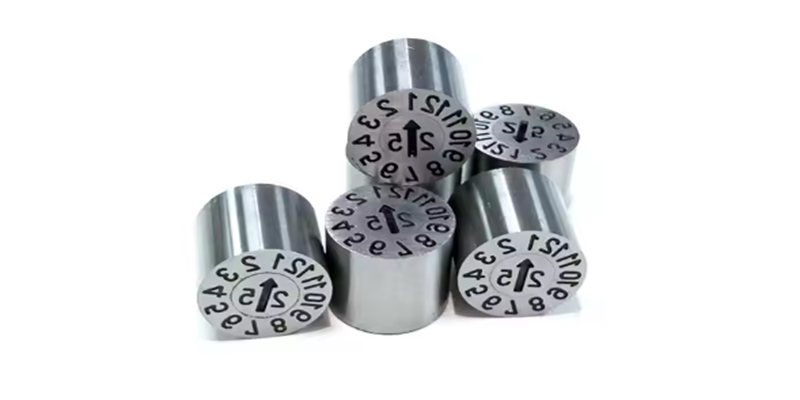
The information shown by a date code insert is usually simple, but it is still highly useful on the factory floor. At the most basic level, the mark may show the production month, year, or a compact batch reference that helps identify when the part was molded. Depending on the insert design, that same marking area can also support other traceability details used in routine production control.
Marking content | Typical purpose |
Date | Shows when the part was produced |
Batch code | Links the part to a production lot |
Shift or line code | Helps trace output from a specific run |
Material code | Distinguishes parts made from different resins |
Letter, number, or logo mark | Supports simple custom identification |
Some date stamp inserts for injection molds go beyond month-and-year coding and can be configured for number stamps, letter stamps, shift marks, material codes, or logo-based identification. That flexibility is useful when a mold must support not only date visibility, but also basic part tracking across different materials, lines, or customer requirements.
Date marks are used because a molded part often needs to be tied back to its production history. In injection molding, that history may include the manufacturing date, batch, lot, shift, material type, or even a specific production line. When a defect appears later—such as dimensional instability, surface issues, or material inconsistency—a molded-in code helps teams trace the affected parts much faster than relying on packaging records alone. This is why date code inserts are closely linked to traceability and quality control rather than simple labeling.
They also support daily factory management. A visible code on the part makes it easier to separate inventory by production period, rotate stock correctly, and identify whether a problem is isolated or widespread. In practical terms, that means fewer delays during inspections, easier root-cause analysis, and better control over molded plastic components moving through storage, assembly, or shipment.
Common operational reasons for using date marks:
● Link a finished part to a production batch
● Support incoming, in-process, and final quality checks
● Simplify inventory rotation and stock identification
● Speed up investigations during complaints or recalls
● Keep traceability information on the part itself rather than in external paperwork
A molded-in mark is created during the injection process, so it becomes part of the plastic component instead of being added afterward. That matters because labels can peel off, ink can fade, and secondary printing steps add extra labor, materials, and inspection points. By contrast, a date code insert creates a permanent mark in the same cycle that forms the part, which helps reduce process variation and removes one more manual step from production.
This approach is often preferred when long-term readability matters. If a product may sit in storage, move through distribution, or stay in service for an extended period, a molded mark is usually more dependable than a surface-applied label. It can also improve consistency in high-volume environments, where even small errors in post-molding marking can multiply quickly.
Date code inserts are especially useful when the part itself must carry reliable production information. That need is common in sectors where traceability affects compliance, shelf-life control, warranty handling, or recall response.
Application area | Why date coding matters |
Automotive parts | Helps trace production lots during quality issues or recalls |
Packaging | Supports stock rotation, freshness control, and batch tracking |
Electronics | Aids warranty validation and failure tracing |
Food-contact products | Improves production identification for safety and compliance |
Medical components | Supports audit trails and controlled manufacturing records |
Injection molding date code inserts work by turning part of the mold surface into a marking surface. The insert is fitted into the mold, and when molten plastic fills the cavity under pressure, the engraved or shaped face of the insert leaves a molded impression on the finished part. In other words, the code is not printed afterward or added in a separate step; it is formed at the same time as the plastic part itself. That is why the mark is usually permanent, consistent, and closely tied to the molding cycle.
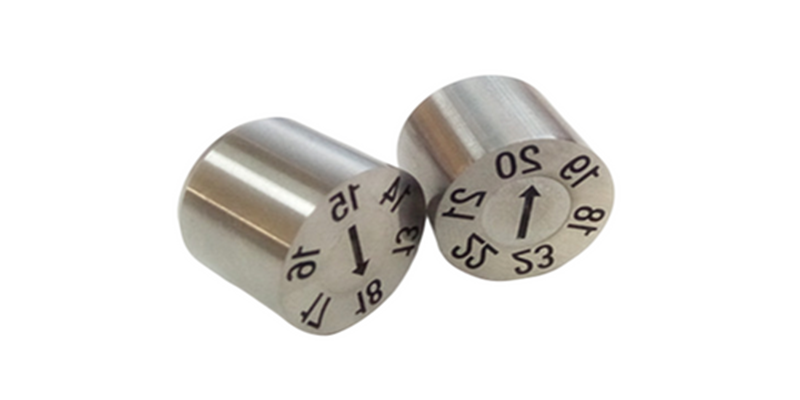
In many common designs, the insert is built as a compact cylindrical metal component with an outer ring and an internal indicator. The operator sets the required position before production, often by turning the inner element with a screwdriver, and the selected character or date position is then transferred to the molded surface during each shot. This simple mechanism is one reason date code inserts are widely used: they create traceability marks directly during molding without adding labels, ink, or another inspection point after the part leaves the tool.
Some newer or more specialized versions are designed for greater marking stability. For example, a one-piece construction can reduce replacement needs and help maintain consistent alignment over long production runs. A ball-bearing-supported marking pin can also improve stamping stability, making the molded date mark clearer and more uniform, especially in repeated high-cycle production. These details matter because even a small shift in alignment can make a code harder to read on the final plastic part.
What happens during marking:
● The insert sits flush with the mold surface
● The selected code position is set before molding
● Molten plastic flows into the cavity and around the insert face
● The insert leaves a recessed or raised code mark on the part
● The mark remains on the product after ejection
The reason the mark often looks like a small clock is mainly visual design. Many date code inserts use a circular layout, with numbers or symbols arranged around an outer ring and a pointer or arrow in the center. When that pattern is transferred to the plastic surface, it resembles a dial or miniature clock face rather than a straight line of text. This is especially common in traditional rotary date stamps used for month, year, batch, or material identification.
For readers trying to identify this feature on a finished part, a molded date code insert mark is usually small, circular, and intentionally organized so one position stands out from the rest. Once you know that the outer ring carries the possible values and the inner pointer highlights the selected one, the mark becomes much easier to recognize on caps, housings, containers, and other molded plastic components.
Choosing the right date code insert starts with physical compatibility. Even a well-made insert will not perform well if it does not match the mold structure, available installation space, and intended marking position on the part. In practice, buyers need to confirm not only the insert diameter, but also whether the mold layout leaves enough room for proper seating, alignment, adjustment access, and stable marking during repeated production cycles. This matters because a date code insert is part of the mold system, not an isolated accessory. If the insert is oversized, poorly positioned, or difficult to adjust once installed, the result may be misalignment, unclear marks, or added maintenance time.
Standard sizing is often the easiest starting point for common applications. The reference material shows standard diameters from D4 to D20, which gives buyers a practical range for many everyday mold designs. At the same time, not every mold cavity or marking area is suited to a standard format. When the available space is limited, the marking area is unusually shaped, or the mold has a special layout, custom mold date inserts may be more appropriate than forcing a standard insert into an unsuitable position. Custom sizing can also help when a buyer needs a specific head structure, unusual marking depth, or closer integration with the mold’s existing geometry.
A useful way to think about fit is to separate the decision into three questions:
● Does the insert physically match the mold diameter and mounting area?
● Can it create the mark in the right position on the finished part?
● Can operators adjust or maintain it without disrupting normal mold operation?
If the answer to any of these is unclear, compatibility should be checked before ordering. In real production, mold fit problems are rarely solved by material quality alone; they are solved by selecting an insert that works with the actual tool design and marking requirement.
Selection factor | Why it matters in practice |
Insert diameter | Must match the mold pocket or planned mounting size |
Marking position | Determines whether the code appears clearly on the finished part |
Access for adjustment | Affects how easily operators can change the date or code |
Standard vs. custom size | Helps balance convenience with mold-specific requirements |
Structural compatibility | Prevents interference with surrounding mold features |
Once fit is confirmed, the next priority is mark quality over time. A date code insert is only useful if the code remains readable and stable in real molding conditions. That means buyers should look beyond the idea of “can it mark?” and instead ask “can it keep marking clearly after repeated cycles?” Readability depends on stable geometry, consistent pressure transfer, and a design that does not shift or wear too quickly. If the code becomes blurred, shallow, or uneven, it loses its traceability value no matter how precise the original design looked on paper.
Material choice plays a major role here. The supplied product information points to SUS420 stainless steel with hardness around 48–54 HRC, which is a practical combination for wear resistance and long-term use in mold environments. In addition, the one-piece construction described in the product data can reduce replacement frequency, while a ball-bearing-supported marking pin helps maintain clear, stable stamping during repeated operation. These are not just specification details; they affect whether the insert can keep producing legible marks across high-cycle molding runs without frequent correction or replacement. The same source also notes 100% inspection before shipment and high-precision production, which supports the idea that durability depends on both material and manufacturing consistency.
For buyers comparing options, the most practical checkpoints are usually these:
● The mark should remain easy to read on the actual molded surface
● The insert material should resist wear under repeated molding cycles
● The structure should support stable, accurate marking rather than drift over time
● Maintenance should be simple enough to avoid unnecessary downtime
This is why product details such as SUS420 stainless steel, controlled hardness, one-piece construction, and ball-bearing-assisted marking are relevant in selection. In Dongguan Tianying Co., Ltd. specifications, these features are presented as part of the insert’s long-life, high-cycle performance, which makes them useful reference points when evaluating whether an insert is built for routine production or only for short-term use.
In short, injection molding date code inserts add clear, molded-in date or traceability marks to plastic parts for easier tracking and quality control. Their value lies in simple, durable identification that holds up in long production runs. Dongguan Tianying Co., Ltd. provides precision date code inserts designed for reliable marking performance, helping manufacturers improve traceability with practical mold-based solutions.
A: Injection molding date code inserts are mold components that form date or traceability marks directly on plastic parts during molding.
A: Injection molding date code inserts help with batch tracking, quality control, and faster issue tracing in molded plastic components.
A: Choose injection molding date code inserts based on mold fit, mark readability, wear resistance, and required traceability data.


