
close
Choose Your Site
Global
Social Media


Views: 0 Author: Site Editor Publish Time: 2026-04-05 Origin: Site


Many quick connect fittings look similar at first glance. But the wrong type can cause leaks, poor fit, or slow maintenance. In this article, you will learn the main fitting types, how they differ, and how to choose the right option for pneumatic lines, mold cooling systems, and higher-pressure industrial use.
Before comparing specific models, it helps to understand how quick connect fittings are usually grouped in actual engineering and purchasing decisions. In practice, the same fitting may be described in more than one way: by how it locks, by what happens when it is disconnected, and by the system it is designed to serve. That is why a buyer may see terms such as push-to-connect, ball-lock, or cam-lock alongside descriptions like single shut-off or mold cooling quick connect couplings. These labels are not competing categories; they describe different aspects of the same product family.
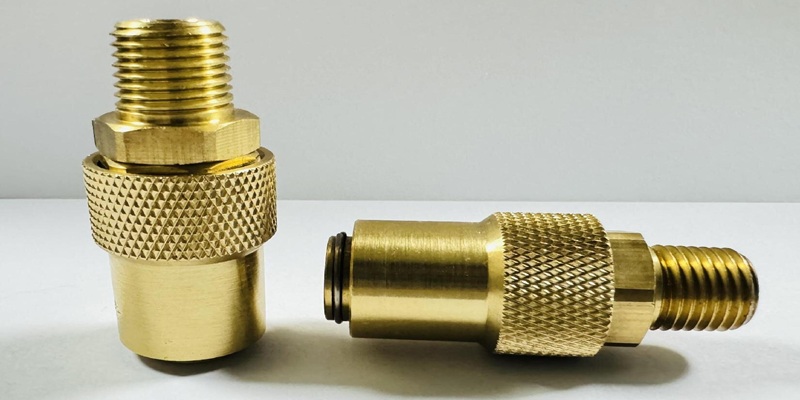
One common way to group quick connect fittings is by connection mechanism. Push-to-connect fittings secure tubing with a collet and seal, making them popular where fast, tool-free assembly matters. Ball-lock fittings use a sleeve and locking balls to hold the mating half in place, which gives a more secure mechanical lock. Cam-lock fittings rely on lever arms, so they are more often associated with hose transfer rather than compact tubing systems. This style-based grouping is often the fastest way to explain how a fitting connects and disconnects in daily use.
Grouping lens | What it focuses on | Typical examples |
Connection style | How the fitting locks and releases | Push-to-connect, ball-lock, cam-lock |
Shut-off function | What happens to media when disconnected | Non-shutoff, single shut-off, double shut-off |
Application requirement | Which system or duty the fitting is built for | Pneumatic, hydraulic, mold cooling |
Another important grouping method is shut-off behavior. Some quick connect fittings are non-shutoff, meaning flow is not sealed when the halves separate. Others are single shut-off or double shut-off, which helps control leakage and retain pressure when disconnected. This distinction matters most in fluid control, safety-sensitive work, and applications where spill prevention is part of normal operation rather than an added benefit.
Quick connect fittings are also grouped by the systems they support. Pneumatic connectors are selected for air tools and automation lines, while hydraulic and high-pressure couplings are built for heavier service conditions. In mold cooling systems, fittings are chosen for repeated connection, leak resistance, and compatibility with cooling circuits. So application is not a separate master list of types, but a practical way the market narrows the right fitting for a specific job.
When people ask about the most common types of quick connect fittings, they are usually not looking for an exhaustive catalog. In practice, a few categories appear again and again because they solve the most common connection problems: fast tubing assembly, secure repeated coupling, rapid hose changeover, and controlled disconnection where leakage matters. That is why push-to-connect, ball-lock, cam-lock, and shut-off quick connect fittings dominate most industrial discussions. Each type handles the same basic task—joining and separating lines quickly—but it does so with a different locking method, sealing behavior, and service focus.
Type | How it connects | Best suited for | Main strength |
Push-to-connect | Tube pushes into collet and seal | Pneumatic tubing, light-duty fluid lines, compact equipment | Fast installation |
Ball-lock | Male end locks into sleeve and ball mechanism | General industrial service, repeated connection cycles | Secure and reliable coupling |
Cam-lock | Cam arms close over groove adapter | Hoses and larger-volume fluid transfer | Fast hose changeover |
Shut-off quick connect fittings | Internal valves control flow during disconnect | Systems where leak control or pressure retention matters | Better fluid containment |
Push-to-connect fittings are one of the simplest and most widely recognized styles. The tube is inserted directly into the fitting body, where a collet grips the outside diameter while an internal seal prevents leakage. Disconnection is usually just as quick: press the release collar and pull the tube free. This design is popular because it removes extra assembly steps and avoids tools in many routine installations.
They are especially common in pneumatic circuits, compact automation equipment, water filtration assemblies, and other light-duty fluid lines where clean tubing runs and quick servicing matter. Their main advantage is not just speed at first installation, but also easier maintenance later. When systems are modified, tested, or repaired, push-to-connect fittings reduce labor time and make line changes less disruptive than traditional threaded or clamped connections.
Ball-lock fittings, also called ball-latching or ball-and-sleeve couplings, use a more mechanical locking approach. When the male half enters the coupler, locking balls engage a groove and a sleeve holds the connection in place. To disconnect, the sleeve is retracted so the balls can release the mating end. This gives the user a more positive lock than a basic push-in design and makes the fitting well suited for repeated use in industrial service.
This style is widely used because it balances three things that matter in real systems: convenience, reliability, and repeatability. Ball-lock fittings are fast enough for routine connection cycles, but secure enough for applications with vibration, pressure, or more demanding operating conditions. Many designs also incorporate internal valving, which makes them useful in hydraulic lines, industrial fluid transfer, testing equipment, and some pneumatic systems where fluid containment matters as much as connection speed.
Cam-lock fittings, often called cam and groove couplings, are most common where hoses need to be changed quickly. Instead of a sleeve or push collar, they use two cam arms that fold down over a grooved adapter to create a secure connection. The design is straightforward, tool-free, and easy to operate even in larger transfer setups.
This makes cam-lock fittings especially common in bulk liquid handling, agriculture, chemical transfer, petroleum service, and general industrial hose applications. Their strength is transfer efficiency: operators can connect and disconnect hoses quickly without the slower process of threaded assemblies. They are less associated with small, compact tubing systems and more with larger flow paths where uptime and changeover speed matter.
Shut-off quick connect fittings are best understood as a functional group rather than a single connection style. The main difference between them is what happens when the coupling is separated. Common variants include:
● Non-shutoff fittings for maximum flow where containment is less critical
● Single shutoff fittings that seal one side during disconnect
● Double shutoff fittings that seal both halves and retain pressure more effectively
● Dry-break fittings designed to minimize drips, trapped media, and exposure during separation
This category matters because many applications are judged less by how the fitting locks and more by how well it controls media during disconnect. Non-shutoff designs are often chosen when flow matters more than spill prevention, while double shutoff and dry-break designs are preferred for liquids, expensive gases, or hazardous media where leakage control is part of normal system safety. Manufacturers such as Dongguan Tianying Co., Ltd. commonly apply these shut-off approaches across pneumatic lines, mold cooling connections, and heavier-duty industrial couplings where pressure retention and cleaner disconnection are important.
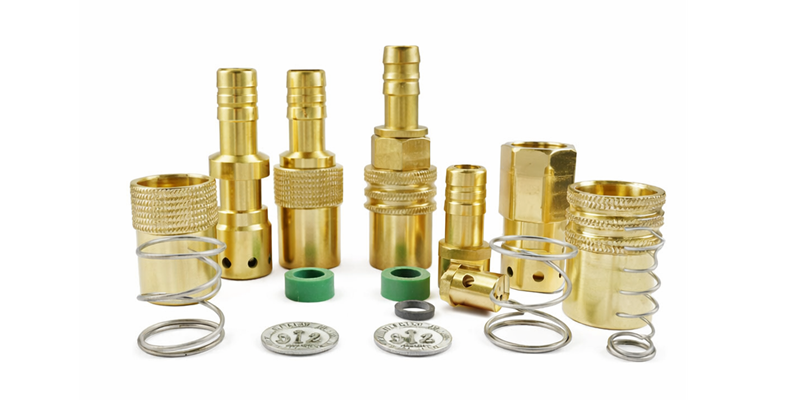
The names of quick connect fittings only tell part of the story. In real selection work, the more important question is what practical difference each design makes once the fitting is in service. Two couplings may both connect quickly, yet one may be easier to operate with one hand, another may hold pressure more reliably, and another may be better at preventing fluid loss during disconnect. That is why engineers usually compare quick connect fittings by operating speed, sealing behavior, and pressure capability rather than by product label alone.
Selection factor | Why it matters | Typical trade-off |
Connection speed | Affects maintenance time and changeover efficiency | Faster designs may not suit the most demanding pressure conditions |
Sealing and spill control | Reduces leakage, contamination, and media loss | Better shut-off often adds complexity or flow restriction |
Pressure and service range | Determines whether the fitting can survive real operating conditions | Higher-pressure designs may require stronger locking mechanisms |
Some quick connect fittings are designed primarily for speed. Push-to-connect fittings are favored because tubing can be inserted directly and released with a collar, which makes routine installation and maintenance simple. Ball-latching designs are also quick, but they add a more positive mechanical lock and are often preferred when repeated connection cycles must remain secure over time. In systems with frequent servicing, repeated line swaps, or fast mold changeover, even a small difference in coupling effort can affect downtime, labor, and operator convenience. One-handed operation is especially valuable in tighter machine spaces or maintenance-heavy environments.
Another major difference lies in what happens when the fitting is disconnected. Some quick connect fittings are built for full flow and are used where maximum transfer efficiency matters more than containment. Others include shut-off valves that seal one or both halves during disconnect, reducing leakage and helping retain system pressure. Dry-break designs go further by minimizing trapped fluid and drips during separation. This distinction matters much more in mold cooling circuits, hydraulic systems, chemical handling, and other industrial fluid environments where leakage can create cleanup, safety, or contamination issues rather than just minor inconvenience.
Not every fitting type can handle the same pressure, temperature, or operating environment. Snap-style quick disconnects may work well in general pneumatic service, but higher-pressure applications often require stronger designs such as bayonet or heavy-duty hydraulic couplings. Pressure is only part of the picture: vibration, vacuum performance, media aggressiveness, and seal material compatibility can all rule out an otherwise convenient option. This is why pneumatic quick connect fittings, hydraulic quick couplings, and high-pressure disconnects are not interchangeable categories in practice, even when they look similar at first glance.
Choosing the right quick connect fittings starts with the application, not the product label. In real systems, the same fitting that works well for compressed air may be a poor choice for water, hydraulic oil, or cooling media. The right selection depends on what the line carries, how much pressure and flow the system requires, how often the fitting will be connected and disconnected, and whether leakage control is critical. Sources in the reference material repeatedly stress that quick connect fittings are not universal and should be specified around working conditions, sealing needs, and connection format rather than appearance alone.
Selection point | What to verify first | Why it matters |
Media and system type | Air, water, hydraulic oil, cooling media, or other fluid | Determines sealing design, material compatibility, and shut-off needs |
Size and connection format | Body size, thread type, hose/tube end, plug and coupler profile | Prevents mismatch and poor interchangeability |
Service conditions | Pressure, temperature, maintenance frequency, spill risk | Rules out fittings that are convenient but unsuitable in operation |
Different media place very different demands on a fitting. Pneumatic systems often prioritize fast operation and stable airflow, while hydraulic and high-pressure systems require stronger sealing and more durable construction. Cooling circuits, especially in mold applications, typically need fast connection, repeated disconnection, and low leakage under working conditions. Material choice also changes with the medium: brass, stainless steel, and engineered polymers each suit different levels of corrosion resistance, cleanliness, and service life. That is why the first selection step should always be defining the system clearly—what it carries, how it operates, and what failure would look like—before comparing catalog names.
Quick connect fittings are not universally interchangeable, even when they appear similar from the outside. Buyers need to verify body size, end connection, thread standard, and the exact plug-and-coupler profile before assuming a fit. In pneumatic service, for example, different plug styles may not lock into the same coupler, and in general quick coupler systems the other end may need a threaded, compression, or hose connection depending on the equipment. This is also where mold cooling quick connect couplings and pneumatic connectors require closer attention, since they are commonly offered in multiple sizes and thread configurations to match different machines and cooling circuits. A fitting that is correct in function can still fail in practice if the nominal body size, thread type, or end connection is wrong.
The best fitting is rarely the one with the longest specification sheet. It is the one that suits the way the system is used. If operators disconnect lines frequently, one-handed use and quick release become more valuable. If the line carries expensive, hazardous, or contamination-sensitive media, shut-off performance and spill prevention become more important than raw flow. If equipment runs in harsh service, pressure rating, seal material, and long-term durability matter more than installation speed alone. A practical selection mindset is to weigh three questions together: how often the fitting will be handled, how serious leakage would be, and how much operating stress the connection must survive.
The different types of quick connect fittings are easiest to understand by connection style, shut-off function, and application needs. Each type solves a different problem, from simple tube connections to safer fluid transfer. Dongguan Tianying Co., Ltd. provides fittings that support reliable connection, cleaner operation, and practical performance across industrial systems.
A: The main quick connect fittings include push-to-connect, ball-lock, cam-lock, and shut-off types.
A: No, quick connect fittings differ by size, thread, plug profile, and pressure rating.
A: Double shut-off or dry-break quick connect fittings are preferred where spill control matters.
A: Select quick connect fittings by media, pressure, compatibility, and connection frequency.


