
close
Choose Your Site
Global
Social Media


Views: 0 Author: Site Editor Publish Time: 2026-03-26 Origin: Site


Many molded parts have a small round mark, but few people know why it is there. That mark often comes from mold date Inserts, a small mold component that adds production date information for traceability. In this article, you will learn what a date insert for mould is, how it works, why it matters, and what to check before choosing one.
A date insert for mould is used to place production information directly onto the surface of a molded part while the part is being formed in the cavity. Instead of adding a sticker, printing a label, or using a separate post-processing step, the mold itself creates the mark as part of the normal molding cycle. In practice, this means the part leaves the tool with a built-in code that can show the manufacturing date, and in some cases a batch code or other simple identification mark. This approach is widely valued because the mark is permanent, easy to read, and tied to the part from the moment it is produced. Sources in the provided material also describe mould date inserts as precision components embedded in injection molds to create clear and stable date or traceability marks on molded parts.
For plastic injection molding, that built-in mark solves a very practical problem: information stays with the component even after packaging changes, labels fall off, or parts are moved between workstations. A date insert also reduces dependence on manual marking, which helps keep identification more consistent from one production run to the next. In many factories, this is one of the simplest ways to add part traceability without changing the basic molding process. Because the insert works inside the tool, it supports direct part marking with very little extra handling and avoids the cost and variation that often come with secondary marking methods.
What the insert marks | Why it matters on the shop floor |
Production date | Shows when the part was molded |
Batch or traceability code | Links the part to a specific run or record |
Lot-related identification | Helps separate output from different production periods |
Material or simple custom code | Supports basic product identification when needed |
Manufacturers use mold date inserts because they make traceability and quality control more direct. When a molded component shows a clear date mark, production teams can quickly connect that part to a specific time period, mold run, or inspection record. If a defect appears later, the mark helps narrow the search much faster than relying only on external paperwork. The source material repeatedly links date inserts with traceability control, quality management, and production efficiency, especially in plastic parts and other molded components where consistent identification matters.
This is especially useful in industries where large volumes of similar-looking parts are produced every day. A built-in date mark helps teams sort suspect parts, review process changes, and identify when a quality issue began. It can also support maintenance planning, since knowing when parts were produced makes it easier to connect field issues with tool wear over time. In short, mold date inserts are used not because they are complex, but because they give manufacturers a low-cost, reliable way to improve production tracking without interrupting the molding workflow.
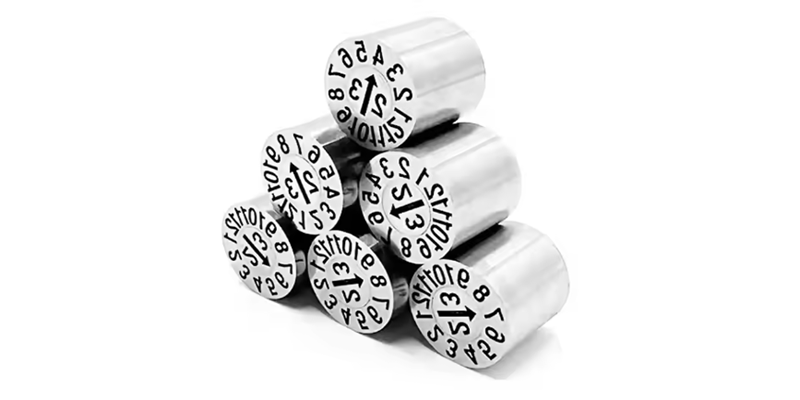
A mold date insert works because it is installed directly in the mold cavity, where its face becomes part of the cavity surface that shapes the product during each cycle. In other words, the insert is not added to the part afterward; it is built into the tool itself, so the marking is formed at the same time as the part. In many designs, the insert is press-fitted into the mold plate or cavity area, with its front surface kept flush to avoid leaving an unwanted step or uneven texture on the molded product. This flush fit matters because the insert has to mark the part clearly without creating a cosmetic defect. The source material also describes date inserts as precision components embedded in injection molds or stamping molds, specifically to mark production information directly on finished parts.
From a tooling perspective, the insert must sit in a location where the mark will be visible enough to read but not interfere with sealing surfaces, assembly points, or other functional features of the part. That is why mold makers typically place the insert on a stable cavity surface rather than in a high-detail area. Some modern versions are also designed for front access or front replacement, which makes it easier to adjust the insert without removing the mold from the machine. That design choice does not change the basic working principle, but it does make the insert more practical in busy injection mould operations where downtime matters.
The mark appears because molten material fills the cavity and copies the surface details of the insert during molding. Once the plastic cools and the part is ejected, the selected date code remains visible on the finished surface as a permanent molded-in mark. This is why date inserts are often preferred over labels or post-molding printing: the identification is created in the same production step, with no extra handling required. The source text notes that the inner indicator can be adjusted, often with a screwdriver, so the correct date position is set before production begins.
Many date marks look like a small clock or dial because the insert is commonly built with an outer ring and an inner arrow. The outer ring carries the characters, while the arrow points to the selected value. On the product, that creates the familiar circular code seen on many molded plastic parts.
Insert element | Function during molding |
Outer ring | Carries the month, year, or other engraved characters |
Inner arrow or core | Points to the selected value before production |
Flush front surface | Keeps the molded part surface even and legible |
Locking or spring structure | Helps the set position stay stable during repeated cycles |
In most applications, the insert shows the essentials: month and year. That is enough for routine production traceability and for identifying when a part was molded. Some designs can also display simple batch-related information, material type, or other short custom codes when a manufacturer needs more than a basic date mark. The supporting material specifically notes that date inserts may mark production dates, batch codes, traceability codes, lot numbers, or material-related identifiers, depending on the design.
Where brand-specific examples are relevant, American DME Date Inserts are described in the provided material as being used for clear and stable marking in plastic injection moulding, with design features intended to keep the date indication accurate through repeated molding cycles.
The most common mold date insert used in daily production is the standard month-and-year style. This design is popular because it gives manufacturers enough detail for routine traceability without making the marking system overly complicated. In typical use, the outer ring shows the twelve months, while the inner section carries the year marking and an arrow or pointer that indicates the selected month. Once set, the insert leaves a compact, readable date code on the molded part, which helps production teams identify when that part was made and connect it to a specific molding period. The reference material consistently describes this as the everyday solution for plastic and rubber molding because it is simple, durable, and easy to update between production runs.
This type remains common partly because it fits the way many factories actually work. Most production teams do not need a highly complex coding system on every part. They need a reliable mark that can be adjusted quickly, read clearly, and maintained with minimal downtime. Standard month-and-year inserts meet that need well, which is why they are often treated as the default choice for general traceability in injection molds. Some source material also notes related standard styles, such as quarter-based markings or multi-year engraved formats, but the month-and-year version is still the most familiar and widely recognized in practical molding applications.
Insert type | Typical use |
Month-and-year insert | Everyday production traceability with clear routine date marking |
Year-only insert | Simpler marking where monthly detail is unnecessary |
Custom date insert | Special coding needs such as batch, shift, or format-specific identification |
Not every application needs the same level of date detail. In some molds, a year-only insert is enough, especially when the main goal is to identify the production year rather than the exact month. This simpler style can also be easier to maintain, since it may require fewer adjustments and suit long product cycles or lower-frequency tooling updates. The supporting material also shows that some standard designs use a multi-year layout, allowing operators to work across several years without changing the overall insert format.
Custom date inserts are used when standard month-and-year marking does not fully match production needs. Depending on the mold standard, customer requirement, or maintenance preference, manufacturers may choose inserts that carry batch numbers, shift codes, lot identifiers, or special date formats. More advanced versions can also support variable formatting or higher data density, but they are usually selected only when traceability requirements justify the added complexity.
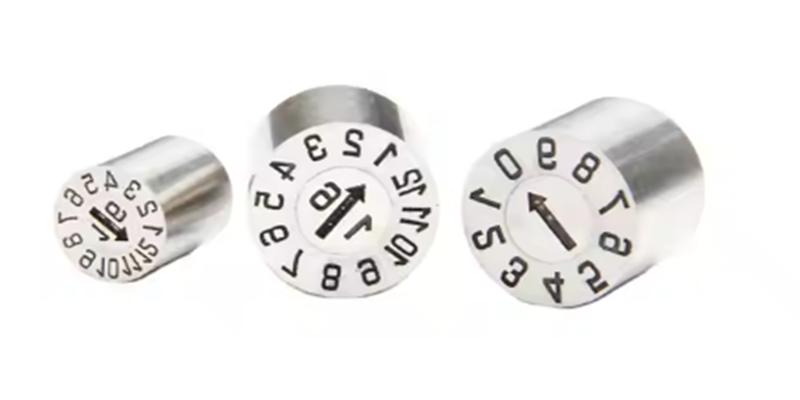
Choosing a mold date insert starts with fit. Even a well-made insert will not perform properly if it does not match the mold structure, the available installation space, and the exact position where the marking needs to appear on the part. In practice, that means checking more than diameter alone. The insert has to suit the mold plate or cavity layout, stay flush with the surrounding surface, and leave a readable mark without interfering with sealing areas, ejector locations, cooling lines, or functional surfaces on the molded component. The reference material notes that date inserts are commonly press-fitted into the mold, and standard diameters often fall within a relatively small range, so dimensional compatibility matters early in the design stage rather than after tooling is finished.
Compatibility also includes the way the insert is serviced. Some molds can accept front-removable or front-refillable designs, which allow technicians to adjust or replace the insert without removing the mold from the machine. That can be a major advantage when minimizing downtime is a priority. The same source material also points out that blind-hole designs may be preferred in some molds because they simplify rear-side layout and can make cooling channel design easier. If the mold follows a specific tooling standard, such as DME-style components, that standard should also be checked before selection so the insert format, head style, and installation method match the rest of the tooling system.
Selection factor | Why it matters before purchase |
Insert diameter and tolerance | Must match the mold seat for stable installation and accurate marking |
Mounting style | Press-fit, blind-hole, or front-removable designs affect tooling layout and service access |
Marking position | The code must be visible and readable without affecting part function or appearance |
Mold standard compatibility | Matching the existing tooling standard helps avoid modification and replacement issues |
Adjustment access | Easier access reduces setup time and maintenance interruptions |
Once basic fit is confirmed, durability becomes the next practical filter. A mold date insert works in a high-pressure, high-temperature environment, so material choice is not just a specification detail. It directly affects wear resistance, corrosion resistance, and how long the insert can continue producing a clear mark without sticking, shifting, or losing accuracy. The supporting material describes date inserts as being made from heat-resistant, rust-resistant materials such as SUS420 stainless steel, with hardness commonly around 50–55 HRC to resist wear in injection molding conditions. It also notes that hardened stainless steel and heat-treated tool steel are used because the insert must survive repeated molding cycles without losing dimensional stability.
Maintenance should be judged just as seriously as material strength. A durable insert that is difficult to adjust can still slow down production. Practical features such as a captured spring, ball detent, or front-serviceable structure help keep the selected date position stable during molding while still allowing technicians to reset the insert when production periods change. The material you provided specifically highlights front-refillable designs, stable indexing structures, and adjustment systems that help maintain clean, legible marks over long production runs. It also mentions a simple maintenance practice: when a date stamp becomes hard to turn, the inside should be cleaned with mold cleaner rather than forced.
Where product details are relevant, Dongguan Tianying Co., Ltd. supplies mould date inserts for plastic injection moulding made from SUS420 stainless steel, with listed characteristics including 48–54 HRC hardness, ±0.01 mm tolerance, and a front-refillable design intended to support stable date marking and reduced maintenance downtime. Those details are useful because they reflect the kinds of properties buyers should compare in any insert: heat resistance, dimensional precision, easy adjustment, and long-term reliability under repeated use.
A date insert for mould is a practical tool that marks date information directly on molded parts for better traceability and quality control. The right choice depends on marking needs and mold compatibility. Dongguan Tianying Co., Ltd. adds value by offering durable mould date inserts designed for clear marking, reliable performance, and easier use in plastic injection moulding.
A: Mold date Inserts mark production date information directly on molded parts for traceability and quality tracking.
A: Mold date Inserts are installed in the cavity, where they form a date code during the molding cycle.
A: Mold date Inserts usually show month and year, while some designs add batch or simple identification codes.
A: Select mold date Inserts based on mold fit, marking position, material durability, and maintenance access.


