
close
Choose Your Site
Global
Social Media


Views: 0 Author: Site Editor Publish Time: 2026-10-08 Origin: Site


Choosing the wrong Quick Coupling size can restrict cooling flow and cause leaks. Even small mismatches may lead to costly downtime. How do you find the right fit for industrial cooling hoses? This guide explains hose sizing, thread standards, flow requirements, and material compatibility to help you select reliable connections.
Hose inner diameter is a useful starting point when selecting a Quick Coupling. It affects the connection size and the available flow area. Buyers should measure the hose opening rather than relying on its outside diameter. The hose wall adds thickness, so these measurements are different.
A coupling must also match the hose attachment method. Some systems use a hose barb, while others use threaded adapters or dedicated mating connectors. The correct choice depends on the hose construction and equipment design. A connector that fits physically may still create a flow restriction. Always check the manufacturer's dimensional drawing before ordering.
Nominal size does not describe every dimension of a coupling. Two products carrying the same nominal size may use different mating profiles. Their locking mechanisms, thread dimensions, or internal passages may also differ. Buyers should check the complete interface specification.
Review the coupling drawing, connection dimensions, and matching component requirements. If replacing an existing fitting, record its model, thread type, and measured dimensions. Do not rely on visual similarity alone. This process helps prevent incorrect orders and unnecessary installation delays.
Thread compatibility is essential for a secure connection. Common industrial thread systems include NPT, BSPP, and BSPT. NPT uses tapered threads, while BSPP uses parallel threads. BSPT uses tapered threads within the British Standard Pipe family.
These systems are not automatically interchangeable. Thread angle, pitch, diameter, and sealing method may differ. Forcing mismatched threads together can damage the fitting and cause leakage. Buyers should confirm the exact thread standard on both sides before installation.
The correct Quick Coupling must support the cooling system's required flow rate. A connector with a narrow internal passage may create additional pressure loss. This can reduce the flow available to the cooling circuit. The effect depends on the coupling design and operating conditions.
Consider the total system, including hoses, bends, valves, and connectors. A larger hose does not guarantee adequate flow if another component creates a restriction. Ask the supplier for flow data or pressure-drop information when available. Compare these details against the cooling system's design requirements.
Every coupling has operating limits. Buyers must confirm the rated working pressure and allowable temperature range. These limits should cover the system's actual operating conditions, including relevant temperature changes and pressure fluctuations.
Do not confuse working pressure with proof pressure or burst pressure. These values describe different conditions and cannot be used interchangeably. The rating of the complete assembly may also depend on the hose, seals, and adapters. Always use the limits specified for the assembled system.
Cooling systems may use treated water, water-glycol mixtures, or other approved fluids. Each fluid can interact differently with coupling materials and seals. Buyers should confirm compatibility with the actual coolant rather than choosing a material based on appearance or cost alone.
Corrosion resistance, moisture exposure, temperature, and cleaning chemicals also affect service life. A suitable material must meet the system's mechanical and chemical requirements. Request technical documentation when the coolant contains additives or the operating environment is demanding.
Tip: Prepare a specification sheet covering hose diameter, thread type, coolant, flow, pressure, and temperature before requesting quotations.
Small-diameter connections can suit compact cooling circuits and equipment requiring modest flow. Their suitability depends on the cooling load, hose length, and available pressure. The coupling's internal passage is especially important because its opening may differ from the hose's inner diameter.
Buyers should not select a small connector simply because it matches the hose end. They must confirm that the complete circuit can deliver the required coolant flow. Check the connector's rated conditions and pressure-drop data when available. This is particularly important for precision equipment and mold cooling applications.
Medium-diameter hoses may serve general industrial cooling equipment, including machinery and mold temperature-control systems. The required connection size depends on the number of circuits and the flow needed by each circuit. Hose length and the number of bends can also affect pressure loss.
For replacement projects, compare the existing hose dimensions with the coupling manufacturer's specifications. Confirm the thread standard and mating profile as well. A nominal size match alone does not prove compatibility. If the original fitting's specifications are unavailable, request dimensional confirmation before purchasing replacement components.
Larger connections may be appropriate for systems requiring higher flow rates. However, increasing the coupling size does not automatically improve cooling performance. The pump, hoses, valves, and equipment passages must all support the required flow.
An oversized fitting may also create installation difficulties or require additional adapters. Buyers should balance flow capacity, connection space, and system pressure requirements. The correct size is the one that meets the complete circuit's needs without introducing unnecessary restrictions or compatibility problems.
The following table provides a selection framework rather than a universal sizing chart.
Connection category | Main consideration | What to verify |
|---|---|---|
Small diameter | Compact installation and required flow | Internal passage and pressure drop |
Medium diameter | General industrial cooling demand | Hose size and mating interface |
Large diameter | Higher flow requirements | Pump capacity and system pressure loss |
Tip: Exact size ranges depend on the coupling series. Confirm actual dimensions through the manufacturer's catalog.
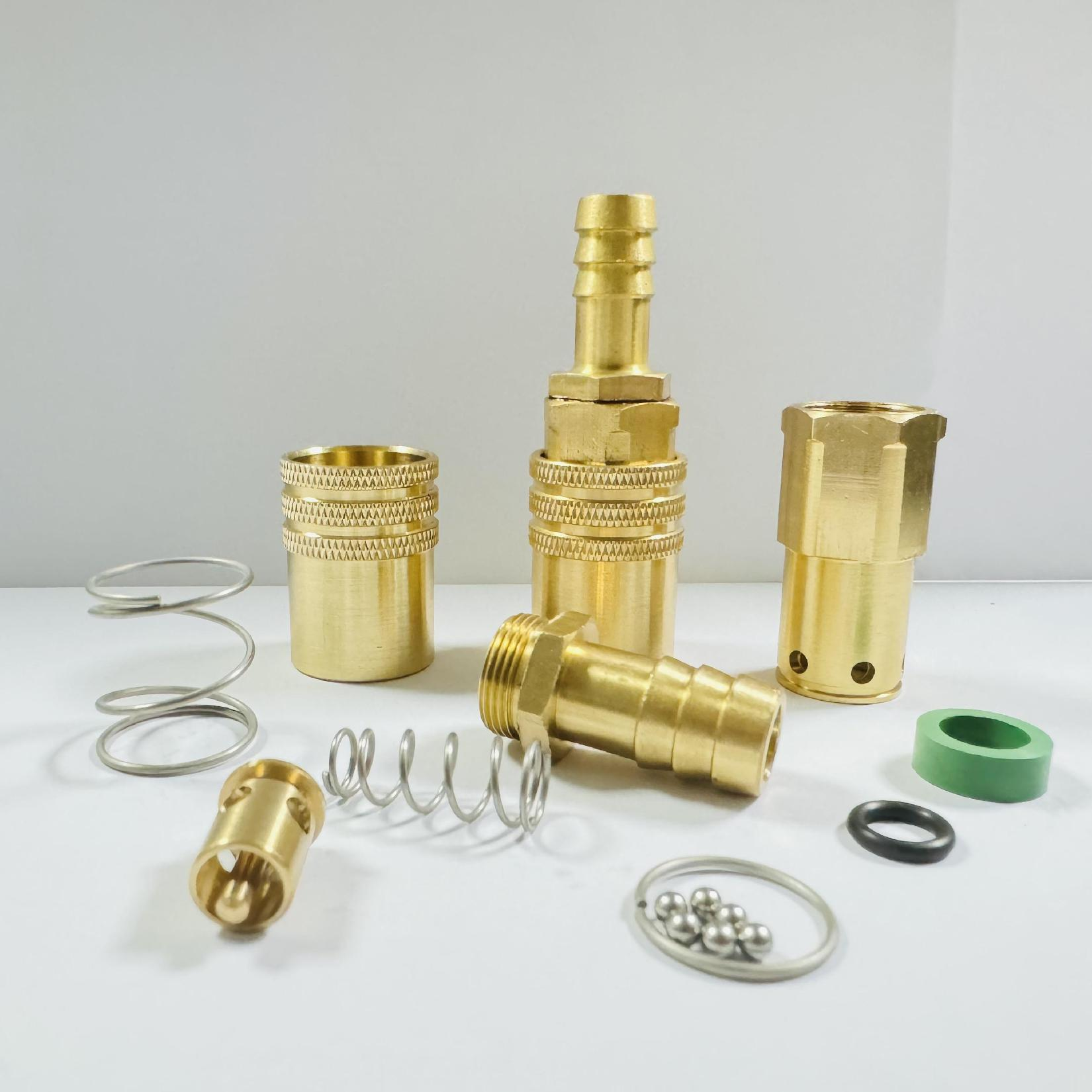
Thread standards determine how a fitting connects and seals. NPT uses tapered threads, while BSPP uses parallel threads. BSPT also uses tapered threads but follows a different thread standard. These differences can affect sealing performance and assembly compatibility.
Buyers should identify the thread type on both the coupling and its mating component. They should also verify thread size, pitch, and the specified sealing method. A thread adapter may be suitable in some installations, but it must meet the system's operating requirements. Avoid forced assembly or improvised sealing methods.
Quick coupling interfaces define how mating components connect and lock together. ISO 7241-A is one standardized hydraulic quick coupling interface. A product described as ISO 7241-A should be checked against the required interface dimensions and the manufacturer's specifications.
The referenced stainless steel S316 coupling illustrates how a defined interface and material specification can support product selection. However, the product is described as a hydraulic coupling. Its suitability for industrial cooling hoses must be verified separately. Buyers should confirm flow capacity, coolant compatibility, pressure limits, and temperature ratings before using it in a cooling circuit.
Flat-face couplings use mating surfaces designed to limit fluid spillage during connection and disconnection. This can be useful where fluid loss or contamination must be controlled. Other coupling designs may use different valve structures and sealing arrangements.
The referenced carbon steel flat-face coupling is identified as a hydraulic connector with a 1/4-inch NPT connection. This description does not establish that it suits every cooling hose. Buyers must check the specified pressure rating, internal passage, fluid compatibility, and mating interface before selecting it.
Tip: Specify both the thread standard and the coupling interface. They describe different parts of the connection and must both match.
Stainless steel can suit applications requiring corrosion resistance and durable metal construction. Its performance depends on the grade, coolant chemistry, temperature, and surrounding environment. Buyers should not assume every stainless steel grade offers identical resistance.
For example, S316 stainless steel may be considered where the application requires suitable corrosion resistance. However, compatibility still depends on the fluid and operating conditions. Check the manufacturer's material declaration and seal specifications. These details help buyers determine whether the coupling can withstand the intended service environment.
Carbon steel couplings may suit certain industrial systems where their mechanical properties and protective finish meet the requirements. Their corrosion resistance depends on the material treatment and surrounding conditions. Persistent moisture or aggressive coolant chemistry may increase corrosion risks.
Before selecting a carbon steel Quick Coupling, confirm its approved application and protective coating. Check whether the cooling medium could damage the finish or exposed surfaces. A hydraulic coupling should not be assumed suitable for cooling water merely because its dimensions appear compatible.
Seals help prevent leakage at the coupling interface. Their performance depends on the elastomer type, fluid chemistry, temperature, and pressure. A seal that works well with water may not perform equally well with every coolant additive.
Buyers should request the seal material and its operating limits. They should also consider how often the coupling will be connected and disconnected. Frequent use can increase wear, especially when components are contaminated or handled incorrectly. Suitable seals and regular inspection support reliable operation.
A coupling with an undersized internal passage can restrict coolant flow. This may increase pressure loss and reduce the cooling capacity available to the equipment. The actual effect depends on the system's flow rate and the connector's internal design.
A larger external connection does not always mean a larger internal opening. Buyers should review the flow passage and pressure-drop information wherever possible. This is particularly important when several fittings are installed in one circuit. The complete assembly must meet the equipment's cooling requirements.
Incorrect threads or incompatible mating profiles can prevent proper sealing. Operators may notice leaks, loose connections, or damaged threads after installation. Continued use can increase maintenance needs and create unsafe working conditions.
Never force two components together because their sizes appear similar. Confirm the interface and sealing method before installation. Replace damaged parts instead of relying on excessive tightening. Follow the manufacturer's instructions and inspect the assembled connection before returning the system to service.
An unsuitable coupling may experience excessive mechanical stress, corrosion, or seal wear. Incorrect pressure ratings can also increase the risk of failure. These problems may lead to unexpected downtime and replacement costs.
Correct sizing reduces avoidable compatibility problems, but it does not remove the need for maintenance. Inspect seals, locking components, hose attachments, and visible surfaces regularly. Track repeated failures to identify whether the cause involves material selection, installation, contamination, or operating conditions.

Start by measuring the hose's inner diameter and identifying its connection type. Then check the coupling's dimensions, thread size, and mating interface. Use calibrated measuring tools where appropriate. Compare the results with the manufacturer's technical drawing.
If you are replacing an existing connector, record its product code and connection standard. Photographing the fitting may help the supplier identify its design. However, a photograph cannot confirm every critical dimension. Request a drawing or sample when the specifications remain unclear.
Review the cooling system's required flow rate and operating pressure. Confirm the maximum operating temperature and the coolant's chemical properties. Then compare these conditions against the coupling's published ratings.
The internal passage deserves particular attention. A connector may fit the hose but still restrict the required flow. If the manufacturer provides pressure-drop data, compare it against the system's design limits. Consider the combined effect of hoses, bends, valves, and fittings rather than evaluating one component alone.
After installation, verify that both mating components engage correctly. Check the locking mechanism and inspect the hose attachment. Follow the manufacturer's approved procedure for leak testing and system startup. Confirm adequate coolant flow before returning equipment to normal operation.
Never disconnect a pressurized line unless the equipment procedure specifically permits it. Isolate the system and release stored pressure as required. Any testing must follow the applicable safety requirements. Record the results to support future maintenance and troubleshooting.
Tip: Keep dimensional drawings and approved coupling specifications on file. This simplifies future replacement orders and reduces purchasing errors.
A complete specification helps suppliers recommend compatible products. Include hose inner diameter, thread type, coupling standard, coolant, working pressure, and operating temperature. State the required flow rate when it is known. Also describe installation space and any need for straight or angled connections.
Buyers sourcing mold cooling connectors can review the Quick Coupling product range for relevant connection options. For restricted installation spaces, a HASCO Standard 90° Male Thread Mould Coupling may be worth evaluating. Its dimensions and mating compatibility must match the intended mold.
Compare product drawings, materials, seals, connection standards, and rated operating conditions. Check the internal flow passage when cooling performance is important. Confirm whether the coupling includes a shut-off mechanism and whether it meets the application's leakage-control requirements.
Do not choose a product based only on nominal size or purchase price. A lower initial cost may not represent better value if the fitting requires adapters or frequent replacement. Request technical documentation when product listings lack critical information. This supports a more reliable purchasing decision.
For new installations, consider verifying a sample before placing a large order. Check the mating interface, hose attachment, and installation clearance. Where practical, evaluate the connection under approved operating conditions. Confirm that the assembly meets the required flow and sealing performance.
Buyers should also consider spare seals, replacement parts, and maintenance support. Consistent specifications help purchasing teams reorder the correct components. If a supplier offers several similar coupling series, request confirmation of the exact model and mating component. This reduces the risk of receiving a connector that looks correct but does not fit.
Tip: Confirm the exact model, interface, and operating limits in writing before approving a bulk order.
Choosing the right Quick Coupling ensures reliable cooling flow and prevents leaks. Check hose size, threads, pressure, temperature, and material compatibility. TY Quick Coupling offers straight and 90-degree mold cooling connectors. These solutions support flexible installation, reliable connections, and easier industrial maintenance.


