
close
Choose Your Site
Global
Social Media


Views: 0 Author: Site Editor Publish Time: 2026-04-02 Origin: Site


Not every water connection problem starts with the pipe itself. Sometimes, the real question is the joint. In this article, you will learn what a water coupling does, where it is used, and when a water quick coupling is the better choice than a standard connection.
A water coupling is a fitting used to join two sections of pipe, tube, or hose so water can continue moving through the system without interruption. In practical terms, it acts as the connection point between separate parts of a line, whether the goal is to extend a run, connect matching sections, adapt different materials, or carry out a repair. In water and wastewater systems, couplings are valued because they preserve continuity while keeping the assembly compact and serviceable. The source material also shows that couplings may be used across a wide range of pipe materials and sizes, which helps explain why the term is so broad in real-world usage.
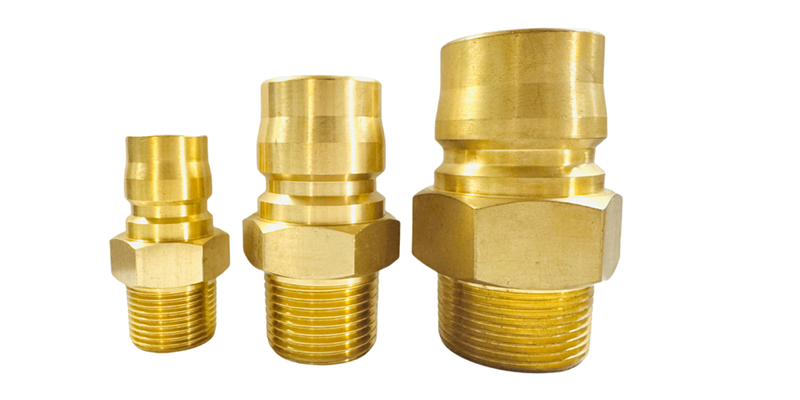
Its main job is not simply to hold two ends together, but to create a secure, watertight joint that can perform reliably under everyday operating conditions. In drainage and plumbing systems, the coupling is often the part under the most strain because the rest of the pipe run depends on that joint staying sealed and mechanically stable. A well-chosen coupling helps reduce the risk of leakage, pipe misalignment, and accidental disconnection, while a poorly matched one can quickly become the weakest point in the system. The reference text also highlights that installation quality matters: if the coupling is fitted correctly, sealing performance is achieved immediately and long-term durability is far more likely.
Water couplings appear in many everyday and technical applications, not just in one narrow category of piping. Common examples include:
● household plumbing lines, where sections of pipe need to be joined securely
● irrigation and hose systems, where connections may need to be assembled or changed quickly
● drainage and wastewater networks, where watertight performance is essential
● repair work, where a coupling can restore continuity without replacing an entire run
● mixed-material systems, where different pipe types need a compatible joining point
In other words, a water coupling is best understood as the small but critical fitting that allows a water system to function as one continuous line rather than a series of disconnected parts.
In any water or drainage system, the coupling is more than a small joining part—it is the point where performance is tested most directly. Pipes may carry water over long distances, but the system only works as intended if the joint stays sealed, aligned, and stable under real operating conditions. The source material makes this especially clear in drainage networks, where couplings are described as the link between system sections and the component most exposed to strain, even when the pipe itself is structurally robust. Pressure demands can also change with the height of the water column or with accidental loading events such as downstream obstruction or flooding, which means the joint has to do more than simply hold two ends together.
A reliable coupling therefore affects several aspects of system performance at once. It helps maintain watertight continuity, supports mechanical stability, and reduces the chance that installation quality will undermine the expected service life. This is why coupling selection is tied not only to fit, but also to field of use and pressure conditions.
If the coupling performs well | If the coupling is poorly matched or badly installed |
The joint stays watertight | Leakage can develop at the connection point |
Pipe sections remain aligned | Poor fit can lead to shifting or misalignment |
The system resists normal operating strain | Weak joints may disconnect or lose stability |
Installation performance is achieved immediately | Long-term durability is reduced |
A good coupling helps prevent several of the most common joint-related failures in water systems. The first is leakage, which usually appears when sealing is inadequate or when the wrong coupling is used for the pipe material, size, or pressure range. The second is poor fit, which can make assembly difficult and create stress at the connection point from the start. The third is instability: if a coupling does not match the application correctly, the pipework is more vulnerable to movement, disconnection, or mechanical weakness over time. The reference content repeatedly ties careful coupling choice to preventing exactly these problems, particularly in systems where watertightness and stability are non-negotiable.
A water quick coupling is designed for speed. Unlike more traditional joining methods that may involve welding, gluing, threading, or more time-consuming assembly, a quick coupling is built to connect and disconnect water lines with much less effort. The source material repeatedly links this kind of solution to fast mechanical installation, immediate sealing performance, and reduced interruption during repair or maintenance work. In practical terms, that makes a quick coupling especially valuable when the job is not only about forming a secure joint, but also about saving time on site and restoring service quickly.
This difference is important because not all water systems are installed under ideal conditions. Some projects involve limited access, pipes that cannot easily be moved, or urgent repair needs where a slow installation method would create unnecessary downtime. The reference content also notes that some couplings are specifically designed for two-part installation or simple bolt-based assembly, showing that “quick” does not just mean convenient for the installer; it also means practical in real operating conditions where speed and reliability need to go together.
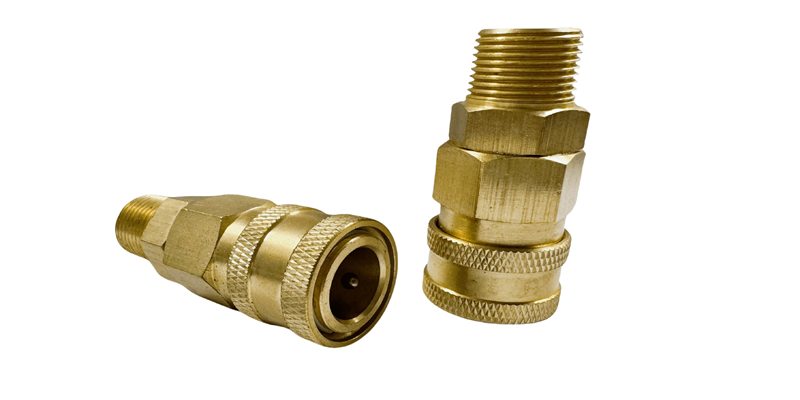
A water quick coupling is usually the best fit when the connection may need to be made, removed, or adjusted without a long shutdown or a complex installation process. This makes it especially useful in hose systems, irrigation layouts, temporary water lines, and maintenance work where access and speed matter as much as sealing performance. In repair contexts, quick-install couplings can also reduce the amount of dismantling required, which is why the source text presents repair-oriented couplings as a practical option when worn, leaking, or misaligned sections need to be addressed without rebuilding the full line.
Situation | Why a water quick coupling makes sense |
Hose setups | Frequent connection and disconnection is easier and faster |
Irrigation systems | Speeds up assembly and seasonal adjustment |
Temporary lines | Restores water flow without a permanent build-out |
Maintenance work | Reduces downtime during inspection or replacement |
Repair jobs with limited pipe movement | Allows practical installation where full repositioning is difficult |
Quick couplings also make sense when the installer wants immediate performance without waiting for curing or dealing with temperature-sensitive installation steps. The file specifically highlights mechanical assembly systems that avoid pre-assembly, welding, and gluing, while still delivering watertight performance right away.
A standard coupling is often the better choice when the system is permanent, exposed to demanding pressure conditions, or expected to resist more than routine connection loads. The source material distinguishes between ordinary wastewater applications, repair couplings, and high-pressure models designed for rainwater networks, infrastructure, or high-rise buildings where overload risk may exist. It also notes that certain installations must handle end-thrust forces caused by branches, plugs, or direction changes, which calls for reinforced or more fixed solutions rather than a convenience-first quick connection.
The same logic applies in simpler plumbing situations. Some quick or compression-style couplings are well suited to temporary setups or emergency repairs, but the reference text explicitly contrasts them with threaded, welded, or glued joints when greater permanence and stability are required. That means a standard coupling is usually the safer choice when the line is meant to stay in place long term, when pressure demands are higher, or when the consequence of movement or disconnection would be more serious.
Choosing the right water coupling starts with a basic rule: the coupling has to match the pipe or hose it is connecting. That means matching not only diameter, but also outside dimensions, pipe material, and the kind of joint the system requires. The source material makes this point repeatedly by describing couplings that are built for the same diameter, different outside diameters, or even mixed materials such as PVC, HDPE, cast iron, copper, steel, and other pipe types. In practice, a coupling that looks close enough is not necessarily correct. A poor size match can create a loose joint, make insertion difficult, or place extra stress on the seal from the start.
Material compatibility matters just as much. Some couplings are designed to repair or connect a very wide range of materials, while others are purpose-built for one system, such as HDPE electrofusion connections or couplings meant for copper or PEX lines. The source text also notes that some products can adapt to different nominal sizes or outside diameters through gasket or follower changes, which shows why buyers should check the actual product design rather than rely on the generic term “water coupling.”
Selection factor | What to check |
Pipe or hose size | Match the coupling to the correct diameter or outside dimension |
Pipe material | Confirm compatibility with materials such as PVC, HDPE, cast iron, copper, or steel |
Connection type | Check whether the job needs a repair, reducing, flexible, or permanent-style coupling |
Seal design | Make sure the sealing method suits the pipe surface and intended use |
Application fit | Choose a coupling built for the actual system, not just a visually similar connector |
After compatibility, the next step is understanding what the system will ask the coupling to withstand. Not all water systems operate under the same pressure or under the same risk conditions. The article source explains that pressure requirements in drainage and water networks depend on factors such as water column height and accidental loading events like downstream obstruction or flooding. In routine wastewater applications, the load may be relatively modest, but rainwater systems, high-rise buildings, and infrastructure projects may require couplings that can tolerate much higher pressure. Some models in the source content are specifically described as high-pressure solutions capable of withstanding loads up to 10 bar, while others are intended for standard conditions only.
Working conditions are broader than pressure alone. In some installations, the coupling also needs to resist end-thrust forces created by branches, direction changes, plugs, or length adjustments. In others, corrosion resistance or exposure to chemicals, sewer gases, fungus growth, ultraviolet light, or outdoor conditions becomes a key factor. That is why choosing by price alone is risky. A coupling may technically fit the line but still be the wrong choice if the environment is harsh or the mechanical load is higher than expected.
Installation should be treated as part of product selection, not something considered afterward. The source material stresses that installation quality directly affects whether stated performance is actually achieved and also influences service life. Some coupling systems support quick mechanical assembly without welding, gluing, pre-assembly, drying time, or temperature-related limitations. Others are better suited to more permanent joining methods. The right option depends on the site, the installer’s access, and whether the connection must be restored quickly.
Long-term use also matters. A good water coupling should be easy to inspect, durable under normal service conditions, and suitable for future maintenance. Some designs are especially useful for repair work where pipes cannot be moved, while others are better for long-term fixed installations. Before choosing, it helps to ask a short set of practical questions:
● Will this connection stay in place for years, or is it likely to be opened again?
● Is the job a new installation, a repair, or a transition between different pipe sizes?
● Does the site require fast installation with minimal shutdown time?
● Will the coupling face corrosion, pressure spikes, or movement over time?
A water coupling keeps water systems secure and working smoothly. The best choice depends on the application, pressure, and connection type, including whether a water quick coupling is needed. Dongguan Tianying Co., Ltd. delivers dependable coupling solutions with strong sealing, practical design, and reliable service for different water system needs.
A: A water quick coupling is a connector that joins water lines quickly while maintaining a secure seal.
A: Use a water quick coupling when systems need frequent connection, disconnection, or faster maintenance.
A: Select a water quick coupling by checking size, material compatibility, pressure rating, and operating conditions.


