
close
Choose Your Site
Global
Social Media


Views: 0 Author: Site Editor Publish Time: 2026-08-26 Origin: Site


Temperature control heavily dictates the success of plastic injection molding and die casting operations. Even minor component failures can cause catastrophic downstream effects. A tiny leak in a water line instantly compromises cycle times. It damages mold integrity and ruins part quality. Manufacturers cannot afford these disruptions on the production floor.
The interface bridging internal mold cooling channels and external temperature units demands absolute precision. This is where specialized fluid connectors prove their worth. Mismatched threads or incorrect plug profiles inevitably lead to cross-compatibility nightmares. Fluid leaks become a constant battle for your maintenance teams. This directly causes extended downtime during routine mold changes.
You need to select the right standard, thread, and profile to ensure seamless operations. We will explore the technical specifications of these critical connections. You will learn how to evaluate, install, and maintain these components to maximize operational efficiency. Implementing the correct hardware strategy eliminates guesswork and protects your expensive tooling assets.
Japanese standard cooling nipples utilize specific plug profiles (e.g., Nitto standard) designed for rapid, leak-free mold changeovers.
A true PT thread nipple conforms to JIS B 0203 standards, requiring precise matching to avoid thread stripping or sealing failures in mold bases.
Features like the hex hole nipple design allow for flush installation in recessed mold ports, maximizing space and preventing physical damage during mold storage.
Proper evaluation requires matching flow rate, material (e.g., brass vs. stainless), and system profiles (avoiding mixing with European Hasco or US DME standards).
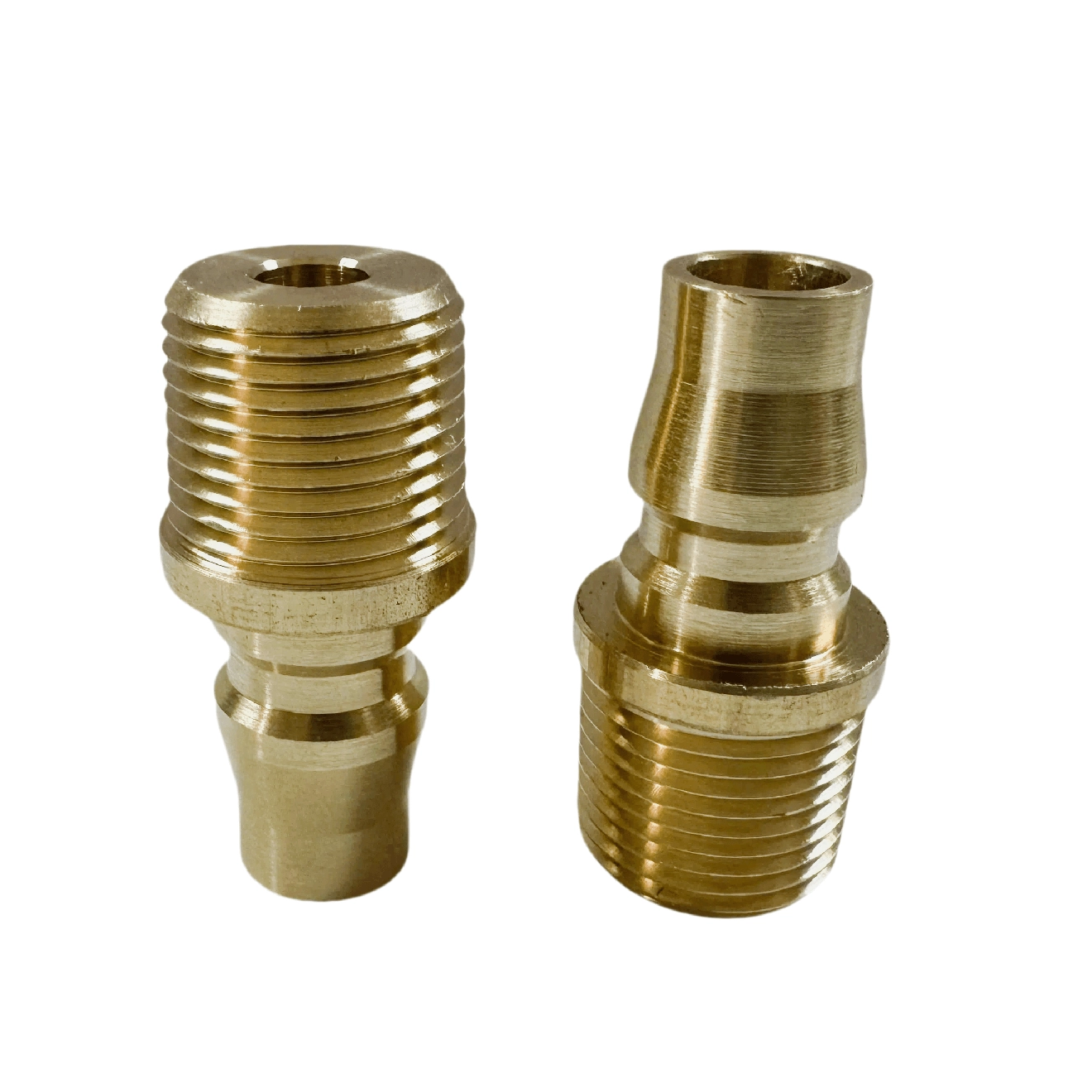
Engineers design fluid systems around specific regional profiles. The Japanese standard cooling water nipple features a distinct plug geometry. This geometry guarantees a seamless fit with a corresponding Japanese quick coupling socket. Many professionals refer to this as the Nitto standard. The plug tip length, O-ring engagement depth, and locking groove sit at precise dimensions. You cannot force a European Hasco socket onto this profile. The specific geometry ensures a perfect seal every time. It eliminates connection guesswork for your operators.
This component serves a vital mechanical function. It acts as the stationary male plug. Tooling technicians thread it directly into the steel or aluminum mold base. It connects complex internal water or oil circuits to flexible external hoses. You rely on it to keep thermal fluids flowing safely under pressure. The fitting remains permanently attached to the mold during storage and transport. It must withstand rough handling while maintaining its sealing integrity.
Standardizing these connections drives significant operational improvements. We connect standardized fittings directly to Single-Minute Exchange of Dies (SMED) methodologies. Standardizing a facility on one single profile reduces setup time dramatically. Operators make fewer errors when they only handle one type of connector. Fast mold changeovers depend on consistent, reliable connections across all machines. Uniform equipment removes hesitation and confusion on the fast-paced production floor.
Thread dynamics dictate the safety of your mold base. A true PT thread nipple follows the Japanese Industrial Standard (JIS B 0203) for taper pipe threads. You must differentiate this from American NPT or European BSPT variants. NPT threads utilize a 60-degree thread angle. PT threads utilize a 55-degree angle. Mixing them invites severe galling. Forcing an NPT plug into a PT hole strips the soft steel. Fluid leaks will inevitably ruin your cycle times and damage your equipment.
Internal geometry innovations change how we assemble molds. Consider the mechanics of a hex hole nipple. It features an internal hexagonal drive channel. This engineering advantage allows engineers to install and tighten the fitting from the inside using a standard Allen wrench. You no longer rely on an external wrench flat. This internal drive mechanism protects the outer sealing surface from heavy wrench damage. It also allows installation in incredibly tight spaces.
Material selection determines component lifespan and application suitability. You must evaluate the fluid media before choosing a metal. Brass offers excellent thermal conductivity and resists rust effectively. It serves as an economical choice for standard chilling water. Stainless steel handles aggressive conditions. You require stainless steel for high-temperature thermal oil circuits. Cleanroom medical applications also demand high-grade stainless steel. You must match the metal to your specific chemical treatments and operating temperatures.
Material Comparison Summary | |||
Material Type | Thermal Conductivity | Corrosion Resistance | Primary Application |
|---|---|---|---|
Standard Brass | Excellent | Good (Water) | General injection molding, cooling water |
304 Stainless Steel | Moderate | High | Medical molding, cleanrooms, treated water |
316 Stainless Steel | Moderate | Exceptional | High-temperature oil, aggressive chemicals |
Mold designs vary drastically based on part geometry. Engineers evaluate when to use flush-mount configurations versus standard protruding types. Protruding models work well for open setups with plenty of clearance. Flush-mount versions sit deep inside recessed mold ports. A heavy mold often swings on a crane during transport. It can easily bump a machine tie bar. A protruding fitting snaps off instantly under that impact. Flush designs prevent this catastrophic snapping during mold transport. You protect your tooling investments by hiding the connection point.
Reaching deep thermal circuits presents another engineering challenge. Thick core plates often bury water lines deep inside the steel block. A brass extension fitting solves this precise problem. It bridges large gaps across multi-plate mold assemblies. You thread it directly into the deepest channels. This bypasses the need for complex, expensive internal gun-drilling operations. The extension acts as a secure fluid tunnel through the intermediate plates.
Sometimes coolant needs specific directional control. Baffled variations integrate internal flow diverters. They force chilled water deep into long mold cores. This deliberate routing eliminates thermal dead zones. Proper flow distribution cools hot spots in the tool efficiently. Better cooling improves part quality and drastically reduces overall cycle time.
Configuration Use Case Chart | ||
Design Variation | Visual Characteristic | Ideal Scenario |
|---|---|---|
Protruding Type | Exposed external hex flat | Open manifolds with high accessibility |
Flush-Mount | Recessed with internal hex | Heavy molds prone to transport damage |
Extension Style | Elongated brass tube body | Bridging gap across multiple core plates |
Baffled Type | Internal brass blade/diverter | Cooling deep, narrow core pins |
Balancing fluid dynamics is critical for cooling efficiency. You must evaluate the internal diameter (ID) against the cooling circuit's requirements. Small internal diameters create severe flow bottlenecks. The resulting pressure drop starves your cooling channels. Cooling lines require turbulent flow to extract heat properly. You must maintain adequate Reynolds numbers to ensure rapid heat transfer. Always verify that the fitting ID matches the main channel ID.
Dimensional tolerances dictate sealing reliability. You must source precision-machined parts. Cast fittings lack the necessary surface finish. Machined surfaces guarantee absolute sealing against the female socket's internal O-ring. A poor surface finish tears the O-ring over time. Micro-abrasions on the plug nose inevitably cause slow, frustrating leaks.
Vendor validation ensures long-term operational stability. You need suppliers who understand tooling requirements. Follow these steps when evaluating a new manufacturing partner:
Check Batch Consistency: Request dimensional reports across multiple production runs to ensure tight tolerance control.
Verify Material Certifications: Demand mill test reports to confirm you receive genuine 304/316 stainless or high-grade brass.
Request Digital Assets: Ensure the vendor supplies accurate 3D CAD models (STEP files) for your mold design team.
Audit Thread Standards: Confirm the manufacturer uses certified JIS thread gauges during their quality control process.
Cross-compatibility warnings demand strict attention. Never mix off-brand plugs with premium sockets. A standard cooling water nipple needs a perfectly matched socket profile. Slight geometrical deviations accelerate O-ring wear. They create invisible micro-leaks that pool water onto the molding machine platens. Stick to a single trusted manufacturer for both the male and female halves.
Installation best practices protect the integrity of the mold base. You must apply thread sealants correctly. Choose PTFE tape or liquid pipe sealants for tapered PT threads. Liquid sealants often perform better on complex manifolds because tape shreds can clog delicate cooling channels. Observe specific torque limits during installation. Overtightening a tapered thread exerts massive radial force. This force easily cracks soft P20 steel mold bases. Use a calibrated torque wrench.
Mixing dissimilar metals introduces galvanic corrosion risks. Threading brass fittings directly into aluminum mold plates triggers a chemical reaction. The cooling water acts as an electrolyte. This weak battery effect causes the aluminum threads to pit and degrade rapidly. You must mitigate this by using proper thread pastes. Applying corrosion inhibitors to your water supply also slows this destructive process.
Routine inspection prevents catastrophic unexpected failures. Maintenance engineers must stay vigilant during scheduled tool teardowns. Look for warning signs before they cause downtime. Implement a strict visual inspection routine.
Inspect the internal hex drive for hard mineral scale buildup that might block coolant flow.
Examine the external locking groove for heavy physical deformation or mushrooming.
Check the tapered thread area for dried, flaking sealant that needs thorough wire-brushing.
Measure the plug tip diameter with calipers to detect excessive friction wear from the socket bearings.
Standardizing your cooling components provides immense strategic value. A unified connection profile streamlines both maintenance routines and daily operations. You eliminate the chaos of hunting for adapter fittings during critical setup windows. Consistent hardware directly supports lean manufacturing goals and reduces operator frustration.
We must recognize the disparity between component cost and failure consequences. A replacement fitting costs mere dollars. However, its sudden failure shuts down a highly profitable production cell. Water leaking onto a hot mold face causes severe thermal shock. It destroys expensive tooling steel and halts your delivery schedule.
Take immediate action to secure your fluid lines. Encourage your procurement and engineering teams to audit all current mold bases. Standardize your facility's thread taps to match the JIS guidelines perfectly. Request sample fittings from trusted vendors for physical tolerance testing. Establish a clear, unified procurement protocol today to ensure seamless production tomorrow.
A: No. Engineering standards strictly prohibit this. PT threads feature a 55-degree thread angle, while NPT uses a 60-degree angle. They also possess different thread pitches. Forcing them together damages the mold base threads and guarantees fluid leaks.
A: Hex hole designs solve severe space constraints. Densely packed mold bases leave no room for a traditional external wrench. The internal hex allows you to install the fitting flush against the plate using a standard Allen key.
A: Look closely at the plug nose geometry. Japanese standards, like Nitto Kohki or Misumi profiles, have distinct locking grooves and tip lengths. Compare your physical plugs against visual catalogs from DME or Hasco to confirm the exact standard.
A: Use an extension fitting when you encounter deep-seated water line ports. They are essential when thick core plates block access, or when standard protruding fittings cause physical interference with heavy mold clamps.


