
close
Choose Your Site
Global
Social Media


Views: 0 Author: Site Editor Publish Time: 2026-08-15 Origin: Site


In injection molding operations, cycle times and part quality depend heavily on precise thermal management. Tooling engineers face constant pressure to optimize cooling rates for maximum throughput. You must rapidly and consistently transfer heat away from the mold cavities. Consistent temperatures ensure dimensional stability and eliminate part warpage. However, incorrect coupling selection often leads to restricted flow, coolant leaks, or extended downtime during routine mold changeovers. These maintenance issues directly hurt your SMED (Single-Minute Exchange of Die) initiatives and stall daily production schedules.
Unplanned downtime disrupts overall facility efficiency and frustrates operating teams. We provide a technical evaluation framework below to solve this ongoing problem. You will learn how to align coupling designs against specific thermal, pressure, and operational constraints. Our guide helps procurement teams and engineers evaluate flow coefficients, seal materials, and structural profiles. Ultimately, this knowledge helps you build a safer, faster, and more reliable cooling network.
A highly efficient mold temperature control water quick coupling determines the overall productivity of your injection molding cell. Fluid transfer directly impacts part quality and production speed. Choosing the right component transforms your operational success.
Success criteria begin with zero-leak operation. Leaks create immediate safety hazards on the shop floor. They also cause invisible pressure drops across the cooling circuit. You also need a verified flow coefficient (Cv). A high Cv ensures maximum turbulent flow. Turbulent flow removes heat significantly faster than laminar flow. Rapid connect and disconnect capabilities under residual pressure matter immensely. Operators must swap heavy molds quickly safely.
Cycle time variables depend heavily on coolant flow velocity. Internal valve geometry often creates severe pressure drops. Fluid hits the valve mechanism and immediately slows down. This restricts turbulent flow inside intricate mold cooling channels. When fluid slows, heat remains trapped inside the tooling steel longer. Your cycle time increases accordingly. Even a one-second increase per cycle destroys profitability over millions of parts.
Changeover ROI focuses purely on labor efficiency. Traditional manual threading takes several minutes per line. Push-to-connect systems take mere seconds. High-mix injection molding environments see frequent mold swaps daily. You can easily calculate the downtime cost. Multiply your hourly machine rate by the hours spent threading hoses. The labor savings from quick-connect systems justify the initial hardware investment almost immediately.
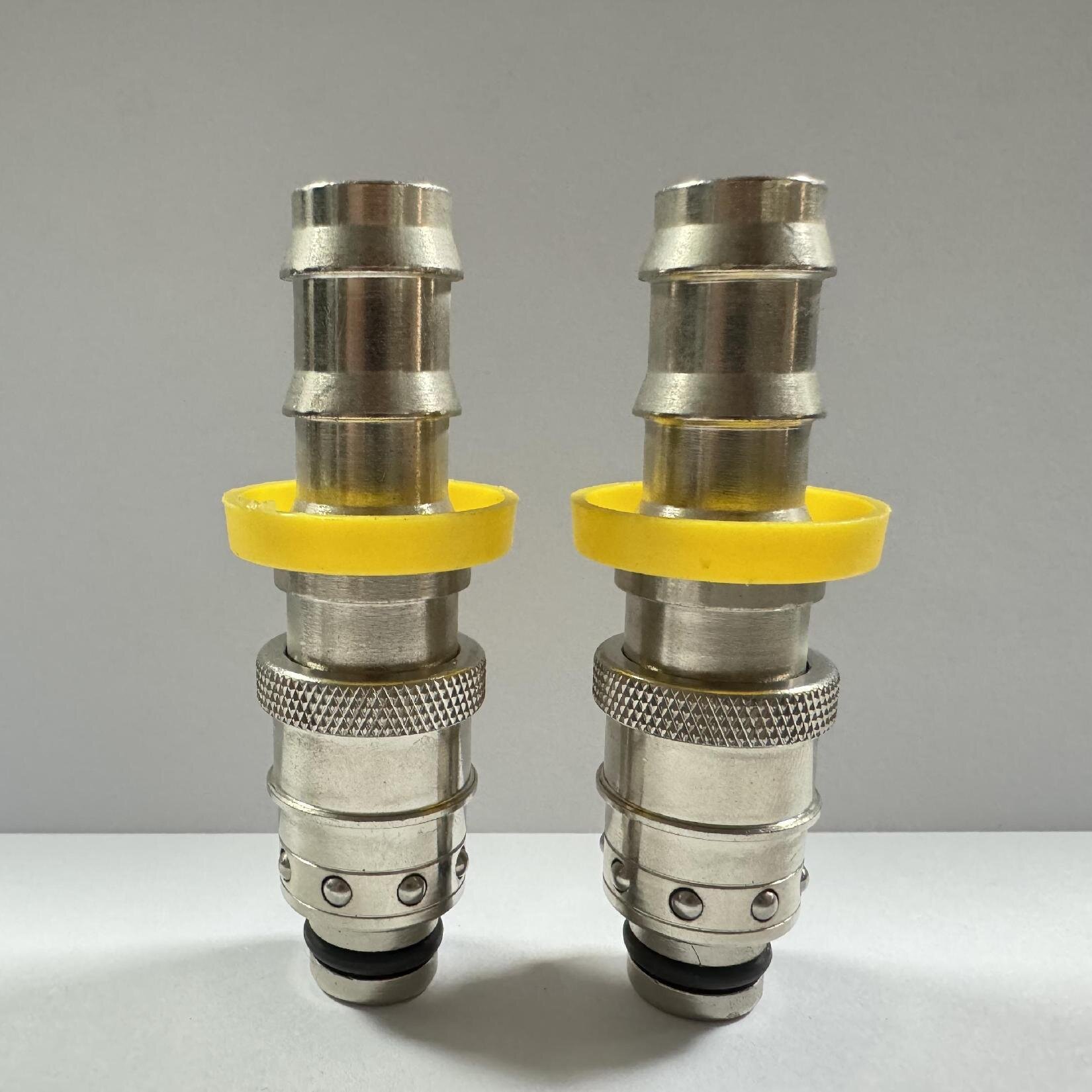
Selecting a reliable water quick coupling involves inherent mechanical trade-offs. You must carefully balance fluid containment against optimal flow rates.
Unvalved designs offer maximum flow capacity. They produce the lowest possible pressure drop. Coolant travels unimpeded through the open bore. They remain ideal for large-volume cooling applications. Heat transfers rapidly across the mold boundary.
However, these open systems require complete line draining before mold changes. Coolant will spill immediately upon disconnection. Spills create high safety hazards on the shop floor. Slips and falls remain a major liability. Air purging systems become necessary to clear lines before uncoupling.
Valved couplings provide automatic sealing upon disconnection. An internal spring pushes the valve shut instantly. You prevent hazardous spills entirely. This feature is absolutely essential for cleanroom environments. It is also mandatory when pumping high-temperature thermal oils.
Valves introduce an inherent flow restriction. The internal poppet blocks the direct flow path. Fluid must navigate around the internal mechanisms. You must often size up the coupling. A larger coupling restores the necessary flow rate but requires more physical space.
| Application Scenario | Recommended Design | Primary Benefit |
|---|---|---|
| High-volume chilled water cooling | Straight-Through | Maximum turbulent flow |
| Hazardous thermal oil circuits | Double Shut-Off | Zero-spill safety |
| Cleanroom medical molding | Single/Double Shut-Off | Contamination prevention |
| Frequent daily mold changeovers | Valved Push-to-Connect | Labor time reduction |
Thermal environments forgive no engineering mistakes. Relying on strict water quick coupling specifications prevents premature component failure. You must evaluate metallurgy, seals, and pressure ratings.
Brass remains the standard choice for basic mold cooling. It provides excellent corrosion resistance for standard facility water. Brass is also highly cost-effective for large facilities. Stainless steel serves completely different industrial needs. You should specify stainless steel for corrosive water treatment chemicals. Cleanroom environments also demand stainless steel to prevent metallic particulate shedding.
Seals represent the primary failure point in any fluid network. Choosing the wrong elastomer causes rapid chemical degradation. Thermal breakdown destroys O-rings quickly.
Always assess your operating pressure against potential system surges. Industrial pumps create massive spike pressures during valve actuation. Water hammer effects can easily blow out a weak seal. Ensure your working pressure rating accommodates these sudden spikes. A high safety factor prevents catastrophic blowouts during peak production hours.
Global supply chains frequently mix various tooling standards. Navigating these regional profiles is crucial for long-term facility standardization. Incompatible parts create massive headaches.
Mixing American (DME style), European (Hasco style), and Asian (Nitto style) plug profiles creates severe operational hazards. Operators often force a plug into the wrong socket. They might seem to click together initially. However, the internal connection remains structurally unsafe. The locking balls do not engage fully.
Visually similar profiles from different standards cause hidden problems. An imperceptible size difference prevents the O-ring from seating perfectly. This slight mismatch causes gradual coolant weeping. Under full operating pressure, the connection may suffer catastrophic failure. Coolant sprays across the machine, ruining sensitive electrical components.
Implement a strict standardization strategy across your entire plant.
Standard off-the-shelf components sometimes fall short. Tooling engineers frequently specify a custom water quick coupling to solve unique geometric or operational challenges. Complex molds require innovative connection strategies.
Modern molds feature highly intricate cooling channels. Designers pack more cavities into increasingly smaller footprint sizes. This creates extremely tight mold spacing. Operators simply cannot reach standard hex nuts. They have no room to swing a traditional wrench. Custom extended sockets or flush-mounted plugs easily solve this physical constraint. You can recess them directly into the mold base.
High-cavitation molds require dozens of individual hoses. Connecting them one by one wastes precious setup time. Multi-coupling plates centralize ten or more connections into a single lever-actuated block. An operator pulls one handle to connect all lines simultaneously. Cam-locking mechanisms secure the block tightly against the mold plate. This system completely eliminates the accidental cross-wiring of inlet and outlet channels.
Inexperienced operators often connect lines backward by mistake. Custom anodized sleeves provide simple visual mistake-proofing. You can use red for hot lines and blue for chilled lines. Mechanical keying takes this safety concept further. Uniquely shaped locking collars physically prevent a hot oil line from entering a chilled water circuit. The socket simply refuses to accept the wrong plug.
Your fluid network relies entirely on quality manufacturing processes. You must partner with a reputable water quick coupling supplier to ensure uninterrupted reliability. Hardware quality varies wildly across different manufacturers.
Never accept unverified or poorly documented components. Require proof of strict leak-testing from the manufacturer. Demand documented flow-coefficient (Cv) verification before placing bulk orders. Testing data proves the component performs under your specific stated pressures. ISO 9001 certified suppliers usually track batch numbers for complete material traceability.
Mold repairs happen unexpectedly during night shifts. Assessing the supplier's inventory depth is absolutely critical. They must maintain deep stock levels for emergency requests. Long lead times stall your production lines for days. Fast shipping matters just as much as a low initial unit cost.
Good suppliers act as extension of your engineering team. Do they proactively assist your maintenance staff? They should help calculate expected pressure drops across complex circuits. They must accurately recommend specific seal materials for specialized heat transfer fluids. A strong technical support team prevents costly specification errors long before final installation begins.
Optimizing mold temperature control requires treating quick couplings as highly engineered components, not basic commodity hardware. Every connection point influences your cooling efficiency and production speed.
A: Focus on double shut-off designs made of stainless steel or specialized brass, equipped with FKM (Viton) seals to withstand temperatures exceeding 200°C without degrading.
A: The internal diameter and valve design dictate the Cv (flow coefficient). An undersized coupling creates a bottleneck, reducing flow velocity below the threshold required for efficient turbulent heat transfer.
A: While many suppliers manufacture to interchangeable international standards (ISO), mixing brands increases the risk of tolerance stacking, leading to premature O-ring wear and weeping leaks. It is safer to standardize.


